Translate
Saturday, 18 April 2015
Clapham Junction - Emily on Sunday
Emily on Sunday/Good Time Music
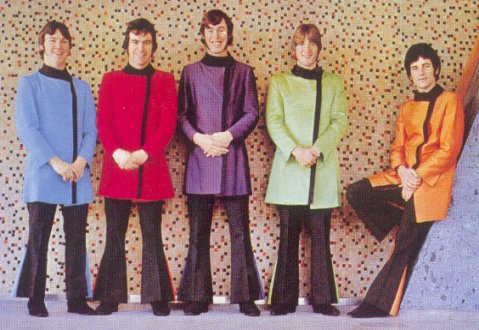
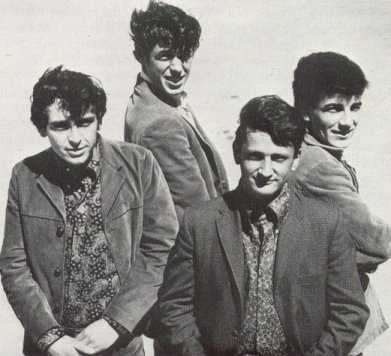
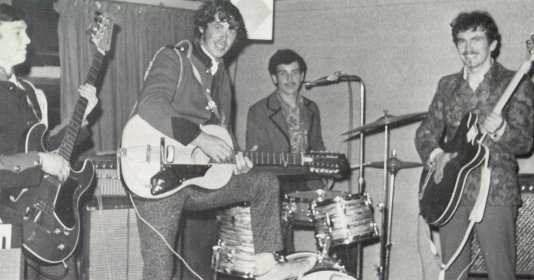
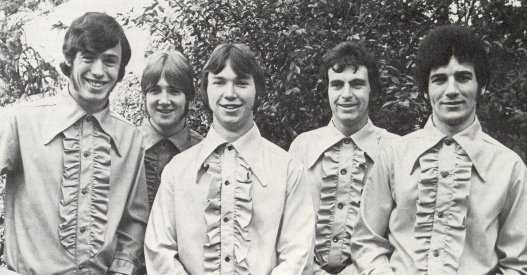
This pop-psych group formed in 1968 and for a while ran its own nightclub called the Union Jack in Sydney, Australia. Several members originally haled from the U.K. and they took their name from Britain’s busiest railway station. Original personnel consisted of Dennis Laughlin (vocals), Sammy See (keyboards), Derek Lewis (guitar), Peter Noble (bass) and David Mills (drums).
The band won a local radio station's Battle of the Bands competition and the prize was the opportunity to record at Martin Erdman's studios on the Du Monde label. The result was a track written by the band "Emily On A Sunday" their only single. Erdman later remaked that the studio was like a grog shop with band drunk constantly during the recording session.
In early 1969, Laughlin and See left to form Sherbet and were replaced by Jim Willebrandt (vocals) and William Mahoney (vocals). It was this lineup that released one single (the outstanding ‘Emily On Sunday’ b/w ‘Good Time Music’) in late 1969.
Patsy Ann Noble - 1960 - I Love You So Much It Hurts
I Love You So Much It Hurts/Like I'm In Love
Patricia "Trisha" Ann Ruth Noble (born 3 February 1944) is an Australian singer and actress. Initially performing as Patsy Ann Noble, she was a teenage pop singer in the early 1960s, with regular appearances on the music and variety television series Bandstand. In November 1961, she released her biggest hit single, "Good Looking Boy", which reached the Top 10 in Melbourne and Top 20 in Sydney. At the Logie Awards for 1961, she won the 'Best Female Singer' from TV Week. By 1962, she had transferred to the United Kingdom and continued her singing career by releasing singles there. In 1965, Noble started her television acting career, and by 1967, she was using Trisha Noble as her stage name. By the 1970s, she had relocated to the United States and had guest roles in various television series including Columbo: Playback, Baretta and Buck Rogers in the 25th Century. In 1983, Noble returned to Australia where she also pursued a career as a theatrical actress. In 2005, Noble had a minor role in Star Wars Episode III: Revenge of the Sith as Jobal Naberrie – mother of lead character Padmé Amidala.
Sunday, 22 March 2015
John Rowles - Another Chapter
It Only Takes A Minute/Bluebird Lullaby/Devil Or Angel/Annabella/Good Thing When It's Gone/Another Chapter/Imitation Of Love/Marlena/Know The Feeling/Love Is Alive
John Edward Rowles OBE (born 26 March 1947) is a New Zealand singer. He was most popular in the 1970s and early 1980s, and best known in New Zealand for his song Cheryl Moana Marie, which he had written about his younger sister.
Rowles was born in Whakatane, New Zealand, and is part Māori. His father, Eddie Hohapata Rowles, played for the 1938 Māori All Blacks. His mother was Pākehā. He was brought up in Kawerau, in the North Island of New Zealand. Rowles' birth name was simply John Rowles; he added the middle name "Edward" after his brother of that name died at a young age.
Rowles is best known in New Zealand and Australia, though he has also performed in the United States, particularly Las Vegas, Nevada and Hawaii, where he was managed by Kimo Wilder McVay. In the United Kingdom he was best known for the hit "If I Only Had Time", which reached number 3 in the UK Singles Chart in spring 1968, and stayed in the chart for eighteen weeks. This was a cover version of the French song "Je n'aurai pas le temps" with which the French singer Michel Fugain, had a hit in 1967.
Rowles had another Top 20 hit in the UK with "Hush... Not a Word to Mary", also in 1968.
Tuesday, 24 February 2015
Darryl Stewart - The Stars Will Remember
I Found A Million Dollar Baby/All The Things You Are/Autumn Leaves/San Antonio Rose/A Nightingale Sang In Berkeley Square/Love Walked In/But Not For Me/Girl Of My Dreams/The Stars Will Remember/When I Grow Old To Dream/Lovely Lady/Memory Lane
Darryl Stewart was an Australian singer from Sydney.
Stewart Charted in the mid fifties with "A Man Called Peter" which was also featured in the film of the same name. Stewart had a very clear voice and was popular during the fifties and in the sixties.
He apparently spent some time in England appearing on several television shows and also working with Winifred Atwell's BBC TV show.
Stewart was known for singing Irish songs with organ accompaniment.The distinctive and dominant organ sound comes from none other than Australia's King of the Theatre Organ, Wilbur Kentwell.
The song "A Man Called Peter" became one of Australia's biggest hits of 1955.
The song was released in Australia on one of Festival Records earliest 45s, cat # SP45-684.
The flipside was "My Cathedral". The song reached # 2 in Sydney in the winter of 1955, a position it held for 3 weeks.It never made #1 as Festival released the 45 of "Rock Around The Clock" by Bill Haley & His Comets.
Also on some of his recordings backing was provided by Australia's foremost pre-rock & roll band leader, Les Welch.
Darryl Stewart's good looks once led to British sex bomb, Diana Dors, having an affair with him.
Thursday, 19 February 2015
Collette - Raze The Roof
That's What I Like About You/Ring My Bell/You Ain't Gonna Hold Me Back/Victim Of The Groove/Push/All I Wanna Do Is Dance/Ordinary Man/Party Time/Only You Can Do It/Hothouse
Sydney-based singer Collette Roberts first came to the nation's attention when she signed to CBS and issued a cover of Anita Ward's 1979 disco hit `Ring My Bell'/`Save Yourself' as her debut single. `Ring My Bell' reached #3 on the national charts in May 1989. Collette followed this up with two further hits, `All I Wanna Do Is Dance'/`Push' (#12 in August) and `That's what I Like About You'/`Hothouse' (#35 in December).
DJ Stephen `Pee Wee' Ferris (ex-Flotsam Jetsam) produced Collette's debut album Raze the Roof. In 1990, Collette returned to the studio with producer Mark S. Berry for her second album, Attitude, which produced the singles `Who do You Think You Are?' (#71 in October), `Upside Down' and a cover of Natalie Cole's `This Will Be' (1991). `Who do You Think You Are?' featured New Jack Swing beat stylings (a mix of funk, soul and hip hop) and its lyrics were aimed at Collette's critics.
Early in her career, Collette performed in bright fluorescent lycra clothing, especially bike shorts, bras, and braces. In 1990 she appeared with a new image of short hair and black clothing in an attempt to cast aside the bike shorts image and for her music to be taken more seriously. Collette appeared briefly as 'Ysabel' on Home and Away in early 1991. After her second album, Attitude (1991) and its singles yielded little commercial success, she retired from the music industry and pursued a career as a stylist and make-up artist. She appeared on Channel 7's Where Are They Now? in 2006, revealing that she does some volunteer work at Sydney's Taronga Zoo.
From MySpace:
Model-turned-pop-singer Collette became an Australian icon when she unleashed the gold-selling Top 5 single Ring My Bell, an Anita Ward cover, in 1989.
The infectious track caught on quickly and Collette became just as well known for her bright, fluorescent lycra clothing as her music, starting a trend of bike shorts, bras, and braces nation-wide!
Though sometimes touted as a one-hit-wonder, Collette in actuality had a handful of successful follow-ups. Ring My Bell was followed by the dancefloor hit All I Wanna Do Is Dance which reached No 12 on the Australian singles chart and further cemented Collette into Australian pop-culture with it's cheeky video. This video depicts three distinct segments in which Collette dances in fluoro vinyl against a cartoon backdrop, dances in leopard print against a space-age backdrop and finally, in her trademark lycra, dancing in a fountain and teaching the moves to random bystanders at Harbourside in Sydney.
That's What I Like About You followed on, as did Collette's debut album Raze The Roof of which she co-wrote most of the tracks.
Fans flocked to join the Collette fan-club and receive regular newsletter updates from the beautiful singer and to learn what she was like outside of the spotlight.
In 1990, Collette ditched her colourful, disposable-pop image and returned with a new look (short hair, black leather) and the first single from her second album, Who Do You Think You Are?
Who Do You Think You Are? provided a more "grown-up" sound and was followed by the singles Upside Down and This Will Be (Everlasting Love) and the album Attitude - showing a more serious side to the young singer.
In 1991, Collette appeared briefly as a character on Australian soap Home and Away named Ysabel - police constable Nick's girlfriend.
After the release of her second album, Collette eventually retired from the music industry and, after a hiatus overseas, pursued a successful career as a stylist and make-up artist. Collette also made a return to the world of modelling and continues to model in successful campaigns.
These days, Collette can also be found showing her love of animals as a volunteer at Sydney's Taronga Park Zoo.
Collette has recently made appearances on Where Are They Now? and What A Year! specials in addition to performing for hundreds of screaming fans at ARQ's Retrosexual night in June 2005 and at Mardi Gras Party 2007 - proving that Collette's fans are just as passionate about her as ever and that her music still makes people want to dance!
Thursday, 8 January 2015
Johnny O'Keefe - Johnny O'Keefe Live
Don't Let Me Be Misunderstood/Over The Mountain/I'm Counting On You/If I Had A Hammer/You Don't Have To Say You Love Me/Sing/Just A Closer Walk With Thee/New Orleans/She Wears My Ring/Shout/Right Now
Recorded in 1968 at the Playroom on the Gold Coast, always at his best in front of an audience the crowd seems appreciative of his performance.
Opening number "Don't let me be Misunderstood" is the standout track for me followed by the Dusty Springfield hit "You Don't Have To say You Love Me". The rest of the album has Johnny singing hits of old "Sing" "Right Now" and "Shout " among them.
Not bad for a live recording . This was originaly released on Calendar records in 1968 then again in 1973 on Summit this is the Summit release.
Wednesday, 31 December 2014
Bill & Boyd - 1975 - Bill & Boyd
continued performing the club circuit in Australia until the late eighties. From the beginning they were always more popular with parents than teenagers,probably just a little too nice for rock and roll.
In 1964 Bill and Boyd moved to Australia on the strength of their first Australian hit "Chulu Chululu". It was a bright, sing-along song recorded live at the Rotorua Sound Shell in New Zealand. The talented pair were quick to gain popularity, appearing regularly on TV, particularly on Bandstand, and working clubs around Australia. They left for America early in 1968, touring with the Supremes and Herb Alpert. On their return to Australia, they established themselves as a top club act. In 1970, they joined Ron Tudor's newly formed Fable label. Their first release, in July 1970, was a version of "It's A Small World" which, although a steady seller, didn't quite make the top 40. They had several releases of singles and albums over the next four years. It wasn't until 1975 that they had their most success, after recording a song called "Santa Never Made It Into Darwin". The song documented the events of Cyclone Tracy that devastated the city of Darwin on Christmas eve 1974. The song made it to number 1 on the Australian national charts. Their 1975 album release was "Bill and Boyd". It was released in two formats, the first from Fable and the second from Axis. The Axis version contains three extra songs, two of which have not been available anywhere else at the time. Another single called "Put Another Log On The Fire" followed, and Bill and Boyd were a household name in Australia. After that they took a break from recording and concentrated on touring
Monday, 29 December 2014
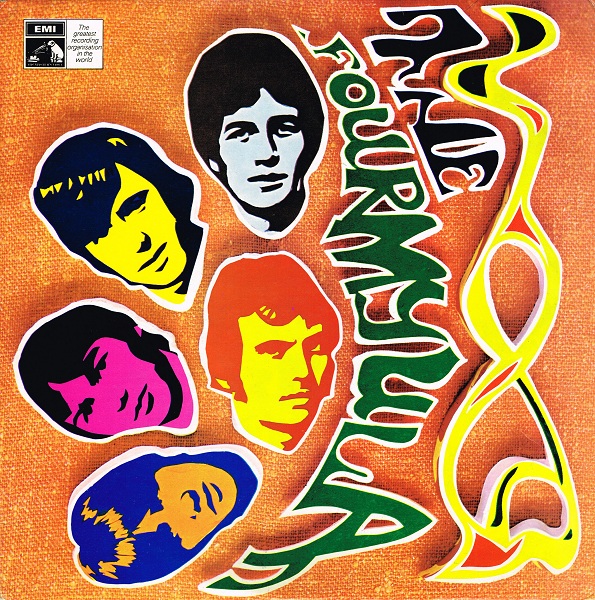
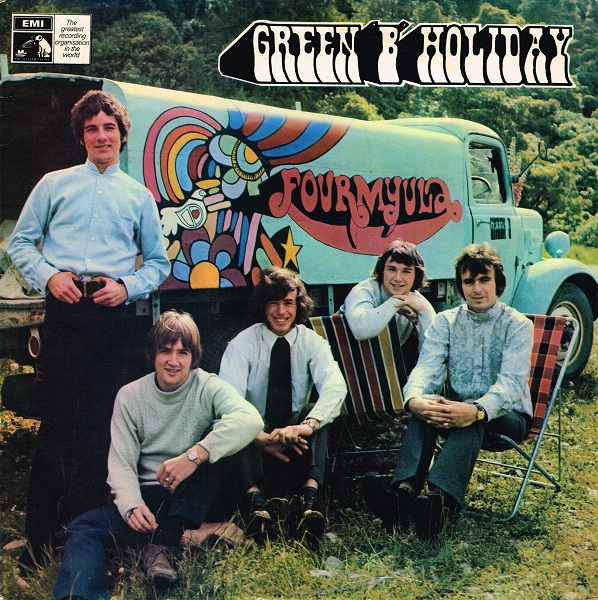
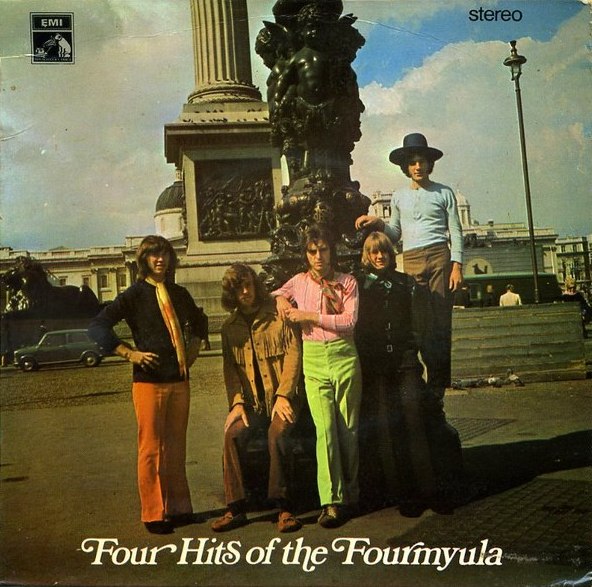
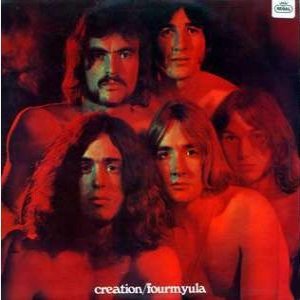
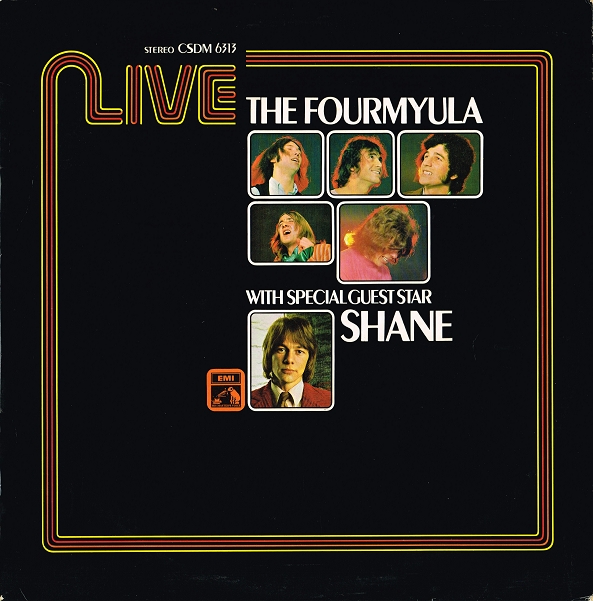
Fourmyula - 1970 - Otaki
Otaki/Which Way Did She Go
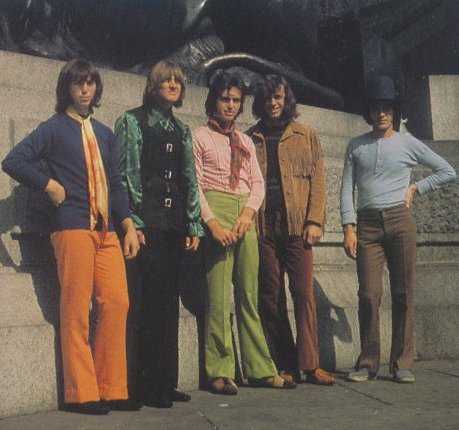
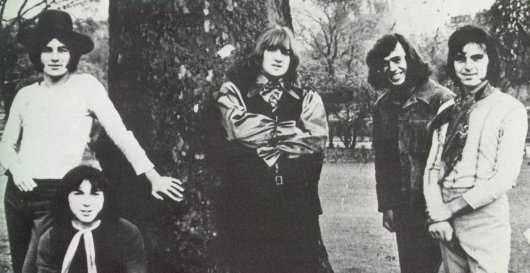
Martin Hope (Lead Guitar / Vocals)
Wayne Mason (Rhythm Guitar / Organ / Vocals)
Ali Richardson (Bass Guitar / Vocals)
Chris Parry (Drums)

Insect 1966, Martin Hope, Wayne Mason, Ron Gascoigne and Chris Parry.

Fourmyula 1967 Richardson, Mason, Parry and Hope.

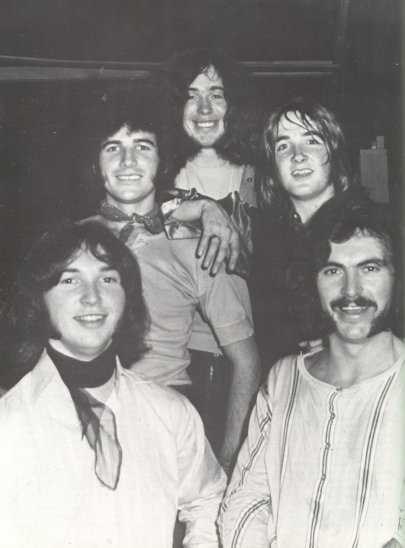
1968, Mason, Evenson, Richardson, Hope and Parry.


1969, Richardson, Parry, Mason, Evenson and Hope.


In England 1969.

Back from England 1969.


Sunday, 21 December 2014
Don Lane - 1968 - Don Lane
Georgy Girl/Girl From Ipanema/The Lady Is A Tramp/Peg Of My Heart/Linda/Try To Remember/I've Got A Crush On You/Someone's In The Kitchen With Dinah/Nancy With The Laughing Face/Candy/I Don't Stand A Ghost Of A Chance/Oh! You Beautiful Doll/When I Fall In Love/The Sadder But Wiser Girl For Me
Morton Donald Isaacson (13 November 1933 – 22 October 2009), known professionally as Don Lane, was a Gold Logie winning American-born talk show host and singer. Lane became best known for his television career in Australia, especially for hosting The Don Lane Show which aired on the Nine Network from 1975 to 1983.
Saturday, 20 December 2014
Marty Rhone - 1976 - Denim & Lace
You Can't Have Me/Star Song/Only If You Want Me/Move On Me/Take Away/Celebratin'/Denim And Lace/Little Miss Demeanour/Playing Your Game/Instant Coffee, Instant Tea/It's No Good/They Made It Rock
Marty Rhone (born Karel Lawrence van Rhoon, 7 May 1948, Soerabaja, Dutch East Indies) is a pop singer-songwriter, actor and talent manager. In July 1975 his single, "Denim and Lace", peaked at No. 2 on the Australian Kent Music Report Singles Chart. He had another hit in June 1977 with "Mean Pair of Jeans", which reached No. 11. As an actor he appeared on the Australian stage in Godspell (1972–73); on TV in Number 96 (1974) and Class of '75 (1975); and in the London theatre production of The King and I (1979–80) alongside Yul Brynner. From late 1987 to August 1990, he was the business manager of a trio of brothers, the Australian boxing champions: Dean (heavyweight class), Guy (light heavyweight) and Troy Waters (junior middleweight).
Saturday, 29 November 2014
Road Apple - 1979 - Take A Bite
I Know The Feeling/Namatjira/Bending The Strings/Turn Me Loose/Fire On The Mountain/Clyde/Last Train Fom Poor Valley/Fourex Beer And Slim Dusty Music/Stretch My Mind/Rolling Stone/Another Rodeo/Orange Blossom Special (Phase Too)
I think this album will be treat for those that love Australian Country Music The band is called Roadapple. I've never heard of them but there is quite a bit of info on the covers (Yay for covers). The band members are Greg Louttit (Acoustic and Bass Guitar) John Harty (Mandolin) Andy Grant (Acoustic and Bass Guitar) Rainor Webb (Banjo) Kornell Banks (Fiddle) Guest Musicians are Peter Richardson (Tambourine) with Stuart Watson and Marcus Holden (Fiddles).
The Majority of the music is Bluegrass and it motors along. There are a couple of originals with rest being covers. There is a nice rendition of the Doctor Hook hit "Cover of the Rolling Stone" and one that stuck out for me "Fourex Beer And Slim Dusty Music".
There is one track # six which on playback I thought what am I going to do with this The start of it sounded like someone had been using the record for a Frisbee but no it turns out it was only special effects here I am cleaning up records and these guys are putting the sound of old crackling records back on.
A nice gesture by the band was donating all the royalties from the sale of the record to The Variety Club Of Australia there is a copy of the thankyou note on the back cover. I hope it sold well in country Australia.
The Album has cover scans and is in WAVE format
Saturday, 22 November 2014
Zoot - Just Zoot
1 X 2 X 3 X 4/Mr. Songwriter/Flying/Yes I'm Glad/Who's Afraid Of You/About Time/Monty And Me/Sailing/Feelings/Sha La La/She's Alright/Shake A Feather
Zoot were a pop/rock band formed in Adelaide, South Australia in 1965 as Down the Line. They changed their name to Zoot in 1967 and by 1968 had relocated to Melbourne. They had a top five hit on the Go-Set national singles chart with a heavy rock cover of The Beatles' ballad "Eleanor Rigby" released in 1970; but they disbanded in May 1971.
Mainstay bass guitarist, Beeb Birtles, was later a founder of Little River Band in 1975 and guitarist singer-songwriter, Rick Springfield, who moved to the United States in 1972, achieved international fame as a solo artist, songwriter and actor.
Band Members
Beeb Birtles – bass guitar, guitar (2011), vocals (1965–1971, 2011)
Darryl Cotton – lead vocals, guitar (1965–1971, 2011; died 2012)
Teddy Higgins – drums (1965–1968)
John D'Arcy – guitar, vocals (1965–1968)
Steve Stone – guitar (1968)
Rick Brewer – drums (1968–1971, 2011)
Roger Hicks – guitar (1968–1969)
Rick Springfield – lead guitar, vocals (1969–1971, 2011)
Zoot reunited for the Rick Springfield and Friends cruise in November 2011. Sadly Darryl Cotton passed away 8 months later from liver cancer.
Sunday, 2 November 2014
Benjamin Hugg - 1974 - Early One Morning
Interlude (Early One Morning)/Thank God You're Here With Me/Such Little Time/Lovely Picture/Silly Minded People/Alleys Of Austin/Michinberry Walk/My Jenny/Here Comes Alice And Me/I've Found Love/Hand Me Down Second Hand Smile/Epilouge (Early One Morning)
Benjamin Hugg was a Melbourne based folk singer who had a #35 hit with "Thank God You're Here With Me" in 1974, The album contains some folk and poptunes .He released a second single "Minchinberry Walk" in 1975 .His second album "What's Been Happening" came out in 1975 Hugg formed a touring band The Benjamin Hugg Band which comprised of Greg Johnson (guitar) Keith Miller (bass) David Pitt (drums). At the 1974 King of Pop Awards Benjamin received the Best New Talent Award he then dissappeared from public view.
Bejamin's real name was Gary Hughes, he was born in Germany and came to Australia in the '70s. He married and had two daughters but was diagnosed with cancer in 1989, and died with his family around him at his home in Melbourne in 1991.
Friday, 24 October 2014
Ray Arnott - 1979 - Rude Dudes
Some Feelings/On the Run/K.O.Love/The World Needs a Shake Up/Rock'n'Roll Girl/Need Your Love/Shaky Knee/Ambush/Boogie On/Teenage Blues
Raymond "Ray" Walter Arnott is an Australian rock drummer, singer-songwriter, he was a member of Spectrum (1970–1973), which had a number one hit with "I'll Be Gone" (recorded before Arnott joined) in January 1971. He also had short stints with The Dingoes in the 1970s and Cold Chisel in 1980s.
In early 1971 he replaced original drummer Mark Kennedy in the renowned Australian progressive rock group Spectrum and he remained with them until they split in early 1973. He sang backing and lead vocals with the band, as well as drumming, and he contributed several songs to their repertoire.
Arnott left Spectrum to join Mighty Kong, a new band formed by ex-Daddy Cool members Ross Wilson and Ross Hannaford, but the new group was very short-lived and broke up soon after recording its only LP in late 1973.
Arnott took over the drum stool from the original drummer in two of the most prominent Australian groups of the period, The Dingoes in the late 1970s and Cold Chisel in 1983, but in both cases his tenure was relatively short.
Cold Chisel frontman Jim Barnes took on Arnott for his first two solo releases, the Bodyswerve album in 1984 and For the Working Class Man album in 1985.
Arnott now lives and works on the Mid North coast of Australia as a teacher at Lismore Heights Public School and occasional band member.
New Link Added 15.01.2021
Saturday, 27 September 2014
Air Supply - Life Support
Give Me Love/Looking Out For Something Outside/Lost In Love/I Just Like The Feeling/More Than Natural/Just Another Woman/Bring Out The Magic/Don't Want To Lose You/Natural
Air Supply is an Australian soft rock duo, consisting of singer-songwriter and guitarist Graham Russell and lead vocalist Russell Hitchcock . They had a succession of hits worldwide, including eight Top Ten hits in the United States, in the early 1980s. They formed in Australia in 1975 and have included various accompanying musicians and singers. They have sold more than 100 million albums.
Life Support is the fourth studio album by Australian soft rock band Air Supply, released in 1979. The album contains the original version of the later hit single "Lost in Love", which peaked at #1 on Australian charts. "Just Another Woman" would also be re-released on the album Lost in Love.
Life Support, a concept album which included a picture disc on its first printing. Session musicians included Mike Bukowsky on brass, Tommy Emmanuel on guitar, Frank Esler-Smith as arranger and keyboardist, Geoff Oakes on brass, Coz Russo on keyboards and Peter Walker (ex-Bakery) on guitar. Esler-Smith had been the orchestral arranger for the production of Jesus Christ Superstar where Hitchcock and Russell had initially met, and he would maintain a long association with Air Supply throughout his life. Produced by Charles Fisher (Radio Birdman, Ol' 55), the album was recorded in the Trafalgar Studios in Sydney, Australia where, as recalled on the 2005 DVD, he had half an inch between the end of his guitar and the studio wall. The album had a five-and-a-half minute version of "Lost in Love", written by Russell in 15 minutes; it was released as a single and peaked at No. 13 in Australia and No. 13 in New Zealand. New Link Added 02.07.2021
Wednesday, 17 September 2014
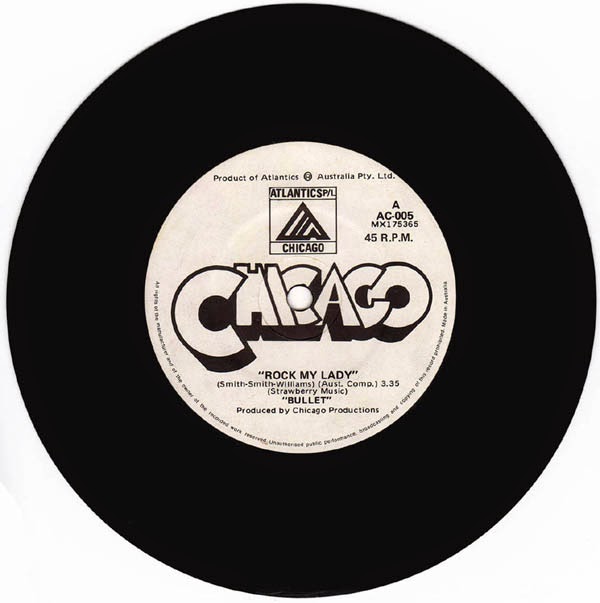
Bullet - Rock My Lady
Rock My Lady/Mover
This single was the only known output from this Sydney band. Released on the Atlantics’ own label, Bullet was in fact an off-shoot from Bullett, losing a T and 3 members during the transition with only bassist Alex Smith remaining. Both Rock My Lady and Mover are solid examples of mid 70s Aussie Boogie/ Hard Rock, with perhaps Mover having the edge over the A side. The Band were active from 1972 to 1976.
Members
Kim Williams-Drums
Alex Smith-Bass
Wayne Smith-Guitar
Saturday, 6 September 2014
Johnny Farnham - 1973 - Sings..Hits Magic Rock 'N' Roll
Everything Is Out Of Season/Nobody's Fool/It's Up To You/If You Would Stay/Sweet Cherry Wine/Don't You Know It's Magic/Rock Me Baby/Lucille/Blueberry Hill/Johnny 'B' Goode/Diana/Memphis Tennessee
This album was released in 1973 and has three singles from '72 and '73 "Rock Me Baby /Nobody's Fool " #4 "Don't You Know It's Magic/Sweet Cherry Wine" #12 "Everything Is Out Of Season/It's Up To You" #8 and "If You Would Stay" the B-side of Shake A Hand which charted at #24 The rest of the album is made up of Rock 'n' Roll standards so as the title suggests there are some hits and some Rock 'n' Roll.
So a nice little package for you John Farnham fans.
Tuesday, 26 August 2014
La De Das - Anthology-Rock 'n' Roll Decade (1965-74)
Little Girl/How Is The Air Up There/Don't You Stand In My Way/I Take What I Want/On Top Of The World/ Jump Back/Hey Baby/Find Us A Way/All Purpose Low/Intro-Covered In Gold/Ruby For The Lady/Come And Fly With Me/Swallow, Little Swallow/You Can't Take It With You/ Life Is Leaving!/Tales Of The Nile/Winter Song/Lullabye/Civic Pride/The Chant/Come Together/Sweet Girl/Gonna See My Baby Tonight/Morning Good Morning (Outro New World Motors Ad)/Rock Me Baby (Live)/The Place/Too Pooped To Pop/ I'm In Love Again/Honky Tonkin'/All Along The Watchtower/Gone Dead Train/I'm Ready (Live)
The band which eventually became The La De Das was started by three young musicians from the rural Huapai district, near Auckland in the North Island of New Zealand. Friends Kevin Borich, Brett Neilson and Trevor Wilson were all from Rutherford High School in Te Atatu. The Mergers formed in late 1963 as a Shadows-style instrumental group and began playing local dances and school socials, but The Beatles' visit in June 1964, and the emergence of The Rolling Stones, crystallised the need for change of style and a lead singer. Trevor Wilson suggested a friend from nearby Mt Albert Grammar School, Phil Key, who joined as vocalist and rhythm guitarist.
The group decided that "The Mergers" failed to reflect the toughness of their music, so began searching for another name. One promoter even changed their name to The Gonks for an early 1965 gig at a summer carnival. They decided on The Criminals, but Key's mother was not impressed and after rehearsals one night at the Wilson house she jokingly suggested instead that they call themselves "something nice, like the la-de-das ...". Key loved it and the name stuck.
By early 1965 their weekend hobby had taken off and they were getting regular bookings on Auckland's booming dance circuit. Their first recordings were made in an Auckland 2-track studio. They cut two tracks written by Borich, "Ever Since That Night" and "Little Girl" (co-written with Trevor Wilson). The single was released on the Talent City label in April 1965, but it only sold to friends, family and fans.
In November 1965 they got a major break when they were called up to fill in at The Platterack. The La De Da's went over well and were offered further bookings at the club. After Phil Key finished school in December, the band turned professional. The Platterack took on The Las De Da's as the resident band, replacing the Dallas Four. The band received £12 per week and were soon packing out the club on a regular basis. It was here they linked up with one of the regular patrons, Bruce Howard, a classically trained keyboard player. Bruce auditioned at the next rehearsal and joined the band. He and Trevor Wilson became the creative core of the band, writing all their original material.
In January 1966 Stebbing was given an import copy of a Changin' Times album by Philips A&R man John McCready, and he immediately tagged the track "How Is The Air Up There?" as possible song for a local band. The La De Da's performed a demo, resulting in them cutting a recording and signing to Zodiac for both management and production, with their recordings distributed through Phillips. They recorded a series of hits through 1966-67, which are now regarded as classics of 60s R&B.
Their third single, a John Mayall song called "On Top Of The World", eventually peaked at #2. Stebbing then offered them residency at his Galaxie nightclub and they were regulars on the C'mon TV show. As indicated by the choice of B-side, the band were now well and truly into their Mod phase, setting Auckland trends with plaid trousers, satin shirts and buckle shoes. The bands situation is described by Phil Key:
The hits just inspired confidence in us. We became totally involved in getting dressed up and going out to gigs, the gigs and rehearsals were everything. Nothing worried us, we were so busy consuming what was happening around us. We were super aware, on top of every trend in music and clothes and language. We tried to be honest and sincere with our music, only playing and recording what we liked. The guys in the good record bars dug what we were doing and they got in all the latest English R&B records for us. We were listening to Zoot Money, John Mayall, Manfred Mann, The Animals, all that sort of stuff and trying to create that sound. We were different from groups like The Underdogs who just played 12-bar blues all night; we tried to be a lot more imaginative about what we did ... We had no idea what we were earning on tour, we just spent what we wanted and ploughed the rest back into the band. We had our way with girls, bought more clothes and equipment and just enjoyed being stars.
In November '66 "How Is The Air Up There" reached the finals of the Loxene Golden Disc and recorded their debut album of covers, which was released in time for Christmas 1966, it immediately sold out of its first pressing.
Keyboard player Claude Papesch introduced them to Bruce Channel's "Hey Baby" and predicted it would be a surefire hit for them. They cut it immediately, released it as their next single in February, and resulted in their first #1 hit in March 1967.
In April they released their classic Stupidity EP. Like their debut album, the songs were all proven stage favourites: "Stupidity", "Coming Home", the Young Rascals’ "I Ain't Gonna Eat Out My Heart Anymore" and Otis Redding's "Respect". Aficionados now regard it as one of the best of New Zealand R&B records of the 1960s.
While preparing for their second album, Trevor Wilson started developing what would later be called "rock opera". For the basis of the piece he chose to adapt Oscar Wilde's classic tale "The Happy Prince". At this point Bruce Howard was his only ally in the band, but together they started to piece the work together. This was the seed of later divisions within the band.
The second LP, Find Us A Way showed the band moving away from their R&B roots and taking in new influences from acts like The Spencer Davis Group, who were themselves starting to take move away from their earlier style. This time the album contained some original compositions as well as stage favourites. Although they were apparently unhappy about not being not consulted over the final track selection or the cover art, it also sold very well.
May 1967 was The La De Da's' first trip to Australia. The trip included a week-long engagement at Ward Austin's Jungle disco, followed by a support slot on the shows at the Sydney Stadium by The Easybeats, who had just returned from the UK. The band were told to clean up their image, so they had their near-shoulder-length hair trimmed back. In following publicity, the band were pitched at the teenage market, a ploy which did not sit comfortably with them.
"All Purpose Low"/"My Girl", was released in June and went to #3 on the NZ charts, followed in August by "Rosalie"/"Find Us A Way" which reached #5.
On the eve of their second visit to Australia, drummer Brett Neilson left the group. He was replaced by Bryan Harris, drummer with The Action. In February 1968, The La De Das' made their second trip to Australia, gaining a reputation for uncompromising and flamboyant live shows on the Sydney circuit. Now dubbed "The Beautiful La De Das" they were at the forefront of Australian psychedelia. In June, Bryan Harris left and he was replaced by Keith Barber, from The Wild Cherries. In August, they made their second trip to Melbourne and they packed out venues around the city. The direct result was their winning the vote as "Best Australian Disco Act" in the 1968 Go-Set Pop Poll in December.
Jimmy Stewart, an expatriate English producer, had recently set up a new independent label, Sweet Peach. Stewart approached the La De Da's with an offer to record and release The Happy Prince in late 1968. The band began intensive rehearsals in preparation for recording at Bill Armstrong's Melbourne studio. But by November the label had pulled out and the deal collapsed. It was at this point that Melbourne identity Adrian Rawlins came to their rescue. At a gig at the Here Disco in North Sydney; he exhorted the band not to give up on the project and his enthusiasm convinced Trevor Wilson to give it one more try. Gathering support from Widmer and Cordon Bleu, Barry Kimberly of publishers Essex Music and the EMI label, Rawlins and Widmer managed to stitch together a deal to record the album.
Overseen by David Woodley-Page, The Happy Prince was recorded over four weeks in early 1969. The process of "bouncing down"—dubbing a completed 4-track recording onto one track of another tape was succeptable to the buildup of noise on the master tape. However, The Happy Prince effectively became Australia's first 8-track recording, achieved by recording onto on two Scully half-inch, 4-track recorders that were electronically synchronised. This de facto 8-track method provided much greater scope for multitracking and overdubbing and a considerable improvement in overall sound quality. The band released The Happy Prince in April 1969. Hailed as the first Australian concept album, the ambitious LP was a suite of songs co-written by Howard and Wilson. Rave reviews from critics failed to transfer into sales, and the band came close to splitting after its release.
Their next tour was to England. Their Traffic covers carried little weight on Traffic's home turf, so they abandoned touring to record new material. They preformed a few well-received shows at London's Stax Club, the Corn Exchange and at clubs in Birmingham, but the gigs soon dried up. They left England to perform a month of poorly paid gigs in France.
Leaving Wilson in the UK, the rest of the group returned to Australia. On their return they found out that there was far less work on offer than they had been led to believe, but they took what was available and continued gigging to pay back the airfares. Reno Tahei (ex-Sounds Unlimited, Compulsion, Castaways, Luke's Walnut, Genesis) filled in on drums for a few months until Wilson returned. Tahei was arrested and was deported back to New Zealand.
The sudden exit of Tahei, Howard and Wilson regrouped as a four-piece. Peter Roberts from Freshwater joined on bass. At Byron Bay on New Year's Eve 1970, the La De Da's unveiled their new 4-piece's stripped-down hard rock style, which took them back to their R&B roots, and drew heavily from 12-bar Chicago blues and the legacy of Jimi Hendrix. The new lineup got a rousing reception at the Wallacia Festival in January. They regularly shared bills with the leading groups of the day -- Tamam Shud, Company Caine, Chain and the similarly revitalised Billy Thorpe & The Aztecs.
In the latter half of the year they often appeared alongside new sensations Daddy Cool and the press made much of the supposed rivalry between the two bands. In September they teamed with Chain, Tamam Shud and Country Radio for two outdoor concerts at Wollongong and Sydney Showgrounds, before a combined crowd of about 10,000 people, and on Boxing Day 1971 they co-headlined with Daddy Cool before an estimated 50,000 people at the 3XY Rosebud Show in Victoria, cementing their position as one of the top three bands in the country, beside The Aztecs and Daddy Cool.
Towards the end of the year, the La De Da's recorded their fourth single. When released in November, "Gonna See My Baby Tonight" drew a rave review from Molly Meldrum in Go-Set ("...a fantastic song, intelligently recorded, it has to be number one.") and it raced up the charts, reaching #6.
In November '71 the La De Da's were scheduled to go to New Zealand for a four-week return tour. Although the shows sold out well in advance, the group dropped out at the last minute. In January 1972 they performed at the inaugural Sunbury Pop Festival, and they proved to be one of the highlights of the weekend. "Roundabout", "Gonna See My Baby Tonight" and the yet-to-be-released "Morning Good Morning" were included on EMI's Sunbury double album live set, released in October '72.
Michael Chugg of Consolidated Rock was hired as their full-time agent, and the group was soon netting regular fees of $300–400 per show. Chugg later left Con Rock and set up his own agency, Sunrise, which continued to handle The La De Da's.
They continued to draw huge crowds through 1972, touring nationally supporting Manfred Mann's Chapter III, and making a record-breaking appearance with Gerry Humphries, Friends and Billy Thorpe & The Aztecs at 3XY's free concert at the Myer Music Bowl, which drew over 200,000 people --- the largest concert audience ever in Australia at that time.
In spite of the successes, internal tension in the band had been growing. Phil Key and Peter Roberts abruptly left the group in September 1972 to form a new four piece outfit called Band of Light. Michael Chugg had resigned as their manager a month before the split, and they were now managed by Roger Davies. Kevin Borich—now the only remaining original member— brought in Ronnie Peel to continue the band. He retained Keith Barber and decided to carry on as a power trio. Their debut performance as a trio was at Sydney's Paddington Town Hall in November.
In January, the new La De Da's lineup headlined the Great Ngaruawahia Festival back in New Zealand. According to John Dix, the La De Da's delivered "...a well paced set [that] blew Black Sabbath and everything New Zealand had to offer clear off the stage."[citation needed] Following this, they completed a short major-city concert tour in May. For the rest of the year, it was a constant round of touring, either as headliners, or sharing the bill with Sherbet, or as support to visiting international acts such as Little Richard, Gary Glitter, Three Dog Night, The Guess Who and Lindisfarne. They also provided backing on two tracks for Richard Clapton's debut album Prussian Blue.
On 8 July, on the way to a Lindisfarne gig, their truck was involved in a head-on collision on the Hume Highway between Holbrook and Albury. Ronnie Peel and their roadie John Brewster (not John Brewster of The Angels) were both hospitalised, although their injuries were not serious. The major casualty was the band's equipment, most of which was destroyed in the crash. Three weeks later the Sunrise agency organised a benefit gig in Sydney at the Green Elephant (the Doncaster Theatre) in Kensington, including the Las De Da's, Sherbet, Buffalo, Pirana, Lotus, Home, Country Radio, I'Tambu, Original Battersea Heroes and Hush, which raised almost $2000 for the group.
By mid-year, the band were being hailed as Australia's leading live act and Borich's was widely regarded as our pre-eminent guitar hero. With Chugg back on board as manager, Kevin was impatient to record a new album. EMI agreed to a new record in September. But the first sessions at EMI's studios were deemed unsatisfactory by the band and all but two tracks were scrapped. (The two tracks, "She Tell Me What To Do" and "No Law Against Having Fun" later surfaced on the compilation LP Legend.)
Later sessions were recorded with different equipment at the Green Elephant Hotel, and were more successful. The resulting LP, Rock'n'Roll Sandwich, was lauded by Glenn Baker as "one of Australia's finest rock albums, a fiery, cohesive work dominated by the superbly talented Kevin Borich and carried off by the reliable gutsiness of Peel and Barber." Touring behind the new LP, released in November 1973, the La De Da's enjoyed their most successful period to date, including supports for Elton John and Suzi Quatro on their Australian tours.
The solid gigging continued through 1974 and into 1975, including a well-received appearance at the final Sunbury Festival in January 1975.
During 1975 problems for the band increased—Australian commercial radio was ignoring their records, and internal tensions were building. The situation was described by Glenn A. Baker 1981:
The disintegration that took hold ... was an easily diagnosed malady which has afflicted every Australian rock & roll band that has ever achieved a degree of popular success. Essentially it comes down to: the bigger you become, the more meaningless your future. Overseas bands can make an album, do a tour and then hide away for a year or two to prepare the next LP with no concern for loss of position. In Australia, just three months off the road to prepare new material and a band's gig price drops to half, the media erects new superstars in their place, and the public acts as if they never were ... That is what killed the La De Da's: the bludgeoning effect of realising that, after 10 hard years, nothing tangible had really been achieved and the only thing that lay ahead was more of the same.
By early 1975, the band's spirits were flagging. In March EMI issued Legend, a valedictory sampler of single A-sides, recent recordings and leftovers put together by Michael Chugg, which also included a much-requested studio rendition of "All Along The Watchtower", Kevin's Hendrix-inspired live showpiece.
In May 1975, Borich officially announced that the La De Da's would disband. New Link Added 18.04.2021
Saturday, 23 August 2014
The Models - 1980 - ALPHABRAVOCHARLIEDELTAECHOFOXTROTGOLF WAVE
21 Hz/Strategic Air Command/Two People Per Sq Km/Pull The Pin/Twice Removed/Pate Pedestrian/Kissing 'Round Corners/All Stop/Uncontrollable Boy (I'm Just An)/Young Rodents/Hans Stand A War Record/Happy Birthday IBM
Models were an alternative rock group formed in Melbourne, Australia, in August 1978 and went into hiatus in 1988. They are often referred to as "The Models" (Mark Ferrie refers to "The Models" in his work bio for example). They re-formed in 2000, 2006 and 2008 to perform reunion concerts. "Out of Mind, Out of Sight", their only No. 1 hit, appeared on the Australian singles charts in July 1985. The related album, Out of Mind, Out of Sight, peaked at No. 3 on the Australian albums charts after its release in August. Out of Mind, Out of Sight appeared on the Billboard 200 albums chart, with the single, "Out of Mind, Out of Sight", peaking at No. 37 on the Billboard Hot 100 singles chart. An earlier song from the same album, "Barbados", had peaked at No. 2 on the Australian singles chart.Models early line-up included Andrew Duffield on keyboards, Mark Ferrie on bass guitar, Janis Freidenfelds (aka Johnny Crash) on drums and percussion, and Sean Kelly on vocals and lead guitar. A later line-up was mainstay Kelly on guitar, James Freud on vocals and bass, Roger Mason on keyboards, Barton Price on drums, and James Valentine on saxophone. Backing singers in the group included Zan Abeyratne and Kate Ceberano (both from I'm Talking) and Canadian-born Wendy Matthews. In early 1989, Duffield, Kelly, Matthews and Valentine were members of Absent Friends. On 27 October 2010, Models were inducted into the ARIA Hall of Fame by Matthews. New Link Added 30.03.2021
Wednesday, 2 July 2014
The Saints - Casablanca [FLAC]
Follow The Leader / Rescue / Senile Dementia / Casablanca / Curtains / Come On / A 1000 Faces / Animal / Out In The Jungle / Beginning Of The Tomato Party / Out Of Sight
The Saints on "Casablanca" were Chris Bailey (guitar / vocals), Janine Hall (bass) and Iain Shedden (drums) with the aid of a number of "hired guns". It was recorded at Matrix Studios in London in February 1982 but wasn't released by Mushroom Records in Australia until 1987