Translate

Sunday, 24 May 2015

Judy Stone - 1966 - 12 Good Reasons


Born A Woman/Forget Domani/These Boots Are Made For Walkin'/One Little Voice/Without Your Love/The Wedding/And The Trouble With Me Is You/A Taste Of Honey/I Need You/Don't Touch Me/Lost Without You/So Softly


 Judy Stone (born 1 January 1942) is an Australian pop and country singer from Sydney and during her teens taught herself to play the guitar. She was heavily influenced by country and western music as a young performer she was "by lined" as The Cowgirl from Granville but on her first appearance on "Bandstand" it was mis-announced as The Callgirl from Granville. In 1960, she met Col Joye and with his help she soon became a regular on Channel Nine's Bandstand. She was also touring around the country with Col and the Joy Boys. In June 1961, she signed a recording contract with Festival Records. Her first two releases were minor hits in Sydney. Her third single, I'll Step Down b/w Mommy and Daddy We're Twisting, was released in February 1962 and became her first Sydney Top 10 when it peaked at number five in March.
Festival then released her debut album also called I'll Step Down to take advantage of her success. Stone and Joye by this stage had begun singing duets on Bandstand so it was no surprise that they teamed up to record a number of EP's and an album. Between June 1962 and July 1963 she released three more moderately successful singles before she finally broke through nationally in April 1964 with her single 4,003,221 Tears From Now, which reached the Top 10 on most charts around the country. Two more singles were issued before year-end but neither made any impact on the charts.
In early 1965, she embarked on a two-month overseas trip to Asia and Japan with Col Joye and the Joy Boys. Her final single for the Festival label was released in September and in February 1966 she married Leo De Kroo of the De Kroo Brothers duo. She then signed up with Col Joye Enterprises' ATA Records, scoring her third Sydney Top 10 hit single in September with Born A Woman. For the rest of the Sixties she continued to consolidate her success with regular appearances on the club circuit as well as touring interstate and overseas. During this period Judy issued five unsuccessful singles for the ATA label before switching to M7 Records in 1971.
Her first M7 single, Day by Day, made the Sydney Top 10 in November. The mid-Seventies was her most successful period in more than a decade with two Top 20 hit singles in 1974 on the M7 label and one Top 40 and one Top 20 hit single in 1976 on the Polydor Records label. Judy Stone also represented Australia at Expo '74 in the US and in the mid-1977 she travelled to the UK where she signed with recording and management company Power Exchange. She continued to perform and record into the early Eighties.
Judy's most recent recording was a duet with Scottish singer/songwriter Isla Grant on a stirring rendition of her song What's A Girl To Do? from Isla's 2007 album "Down Memory Lane".

Saturday, 23 May 2015

Johnny O'Keefe - 1963 - About Love


My Heart Belongs To Only You/When I Fall In Love/I Will/Lollipops And Roses/Send Me The Pillow That You Dream On/Moon River/You Don't Know Me/A Girl Needs To Love And Be Loved/I Love You So Much It Hurts Me/I Can't Stop Loving You/Ecstasy/Let True Begin


John Michael (Johnny) O'Keefe (1935-1978), rock'n'roll singer, was born on 19 January 1935 in Sydney, second of three children of Raymond Moran O'Keefe, furniture salesman, and his wife Thelma Edna, née Kennedy, both born in New South Wales. Johnny attended Christian Brothers' College, Waverley, and completed a first-year certificate at the College of Retailing. His father occasionally played in a jazz band. While at school Johnny sang in the choir and studied piano. He began to imitate the emotional singing style of the American pop idol, Johnnie Ray, and appeared on radio 2UW's 'Australian Amateur Hour'.

While working as a salesman in his father's furniture store, R. M. O'Keefe & Co., Pitt Street, O'Keefe enrolled in economics at the University of Sydney. After he heard Bill Haley singing Rock Around the Clock in the film Blackboard Jungle in 1955, he decided to become a rock'n'roller. In September 1956 he and Dave Owens formed the 'Dee Jays' (Dee was for Dave, and Jay for Johnny). They were joined by Johnny Greenan, Lou Casch, Keith Williams and Johnny 'Catfish' Purser. The band began performing at Stones Cabaret, Coogee. By early 1957 they were playing at four dances a week (at Chatswood, Coogee, Balmain and Petersham) and also appearing on Saturdays in the interval between feature films at the Embassy Theatre, Manly.


After signing with Festival Records Pty Ltd, O'Keefe and the 'Dee Jays' released You Hit the Wrong Note Billy Goat, written by Haley, in July 1957. Their second record was Am I Blue?, with Love Letters in the Sand on the 'flip side'. In October they performed in one of Lee Gordon's 'Big Shows' at the Stadium with American stars 'Little Richard', Gene Vincent and Eddie Cochran. Five months later O'Keefe released Wild One, which he wrote with Owens, Greenan and Tony Withers, a disc jockey; the song was an immediate hit and made him the first Australian rock'n'roller to reach the national charts. Shout followed in 1959 and She's My Baby in 1960.

Stockily built and 5 ft 7½ ins (172 cm) tall, O'Keefe looked more like a boxer than a singer. Although his appearance was not striking and his vocal talents were unexceptional, most commentators agreed that he had 'presence'. On stage he traded, in part, on an overt sexuality and handled the microphone in a suggestive manner. He once remarked: 'It didn't matter how you sang the song; it mattered what you did'. Despite his image as 'The Wild One', he promoted rock'n'roll as wholesome entertainment, claiming that it was one of 'the greatest barriers to delinquency'. Like most stars of that period, he aspired to be an 'all-round entertainer'; two of his biggest hits were the ballads, I'm Counting on You (1961) and She Wears My Ring (1964).

At St Therese's Catholic Church, Dover Heights, on 2 August 1958 O'Keefe had married Marianne Renate Willinzik, a 23-year-old hairdresser; they were to have three children before she divorced him in 1966. The marriage felt the strain of his frenetic lifestyle and ambitions. O'Keefe left the family business in 1958. Joining Lee Gordon's record company, he worked as an artist and repertoire man. He recruited singers for the Leedon label, including 'Lonnie Lee', Barry Stanton and 'The Crescents', and wrote songs for them. From 28 February 1959 he and the 'Dee Jays' starred on the Australian Broadcasting  Commission's Saturday evening television show, 'Six O'Clock Rock'. O'Keefe soon became the compere, and was closely involved in the show's production. By the beginning of 1960 he also hosted an A.B.C. radio programme, the 'Johnny O'Keefe Show, Rockville Junction', which was broadcast on Friday nights.


O'Keefe regarded success in the United States of America as the ultimate accolade. In November 1959 he had visited America and signed with Liberty Records. Next year he toured thirty-five States and appeared on the television programme, 'American Bandstand', but his reception was far from the triumph he wanted and he returned to Australia. On 27 June 1960 he was involved in a serious motorcar accident on the Pacific Highway near Kempsey. He received sixty-four stitches in his head and another twenty-six in his hands. After only seven weeks he again compered 'Six O'Clock Rock'. In 1961 he hosted the 'Johnny O'Keefe Show' on ATN-7.

That year O'Keefe made another unsuccessful American tour. He flew to London, where he suffered a nervous breakdown. In August 1962 he suffered a further breakdown and spent two months in a psychiatric ward at Royal Prince Alfred Hospital, Sydney. He returned to his television show—renamed 'Sing, Sing, Sing' during his absence—in February 1963, but it ceased production in 1965. Exceptionally energetic and often charming, O'Keefe was subject to dramatic changes of mood and had a tendency to overreact. In November 1964 he was back in hospital, his 'holiday camp' as he jokingly called it.

The rise of 'Mersey beat' music signalled a change in O'Keefe's fortunes. He called 1964, the year in which 'The Beatles' toured Australia, the 'biggest downer of his career'. The production and sale of his records declined. Following a brief return to television in 1967 as host of 'Where the Action Is', he found work largely in tent-shows and at leagues clubs. In 1974 his career underwent something of a resurgence. His show, The Good Old Days of Rock'n'Roll, opened at the St George Leagues Club in August that year and continued on tour until his death. His song, Mockingbird, recorded with Margaret McLaren, became a hit. On 14 February 1975 (St Valentine's Day) at the Masonic Hall, Waverley, he married with Methodist forms Maureen Joan Maricic, a 29-year-old fashion consultant and a divorcee. They opened a boutique, J. O'K Creations, at Paddington in 1978.


The highs and lows of O'Keefe's life appeared extreme. Apart from numerous breakdowns, he had some run-ins with the police for driving offences and minor drug charges. Generous by nature, he helped to raise funds for the Spastic Centre of New South Wales and the Margaret Reid Orthopaedic Hospital, St Ives. He entertained Australian troops in Vietnam in 1969 and performed at a free concert in cyclone-devastated Darwin in 1975.

After taking pills at his Double Bay home, O'Keefe died of barbiturate poisoning on 6 October 1978 at St Vincent's Hospital, Darlinghurst, and was buried with Catholic rites in Northern Suburbs cemetery. His wife survived him, as did the daughter and two sons of his first marriage. The Australian Variety Artists Association named an award after him. In 1988 his name was included in the Australian Record Industry Association's hall of fame.


Friday, 22 May 2015

Daly-Wilson Big Band - 1978 - To Good For A One Night Stand


Star Wars/Charlies Angels/Lady Madonna/Song For Sarah/Car Wash/Gonna Fly Now (Rocky)/Doctor Sunshine/Baretta/Tribute To A Czar/Timepiece/Carnival/The Greatest Love Of All-I Always Knew I Had It In Me


Formed in 1968, the Daly-Wilson Big Band was the brainchild of Warren Daly (drums) and Ed Wilson (Trombone, composer, arranger-orchestrator). The band manager and 3rd partner was Don Raverty, (lead trumpet). The Daly-Wilson Big Band band grew out of an underground movement in Sydney, Australia, playing transcriptions, re-arrangements of existing jazz standards and originals in a Jazz, Funk-Rock, Fusion style. They band recorded 2 albums before Benson & Hedges chose to sponsor the band, thereby making it a viable entity.
 The band toured Australia several times between 1973 & 1978 but also toured to New Zealand, Japan, Hong Kong, Russia, England and the USA. In the USA they performed at the Hilton Hotel in Las Vegas as well as Donte’s, the renowned jazz venue in Los Angeles. They recorded several albums with only the “ON TOUR” album going gold. Many of Australia’s foremost musicians of the 70’s and beyond owe their careers to the start they got in the Daly-Wilson Big Band. After their initial tour, to rave reviews, all subsequent concert tours were sell-outs.

Some Of The Many Band Members

Barry Sutton, Bob Bertles, Bob McIvor, Bob Pritchard, Charles Hull, Col Nolan, David Glyde, Dieter Vogt, Don Raverty, Doug Foskett, Ed Wilson, Errol Buddle, Geoff Naughton, Graeme Jesse, Greg Foster, Herb Cannon, Hugh Williams, Jeff Duff, John Coca, John Helman, John Mitchell, Larry Elam, Merv Knott, Mick Kenny, Mick Reid, Miles Harris, Norm Harris, Pat Crichton, Paul Long, Peter Scott, Ray Aldridge, Steve Powell, Warren Clark, Warren Daly.


Albums

Live! At The Cellblock Columbia 1970, On Tour Reprise Records 1973, Daly-Wilson Big Band Featuring Kerrie Biddell - The Exciting Daly-Wilson Big Band Festival Records 1975, Daly-Wilson Big Band Featuring Marcia Hines - Daly-Wilson Big Band Reprise Records 1975, In
Australia '77 Hammard 1976, Too Good For A One Night Stand Hammard 1978. 

Wednesday, 20 May 2015

The Orphans - 1982 - Hop Skip Jump


Hop Skip Jump/See You


Formed in Melbourne in 1980 disbanded 1983.

The Orphans were Alex Burns (v), Michael Bright (g,v), Cres Crisp (k), Alex Batsch (b) and Jim Logan (d). They were around from 1981-1983, releasing two singles on LRB guitarist David Briggs' Rough Diamond Records. The singles were "Hop Skip Jump" which charted as high as #23 in 1982. You can view the clip on YouTube. The second single was "Big Ronnie" backed with "19th Nervous Breakdown" and a live mix of the title track "Big Ronnie".

Sunday, 17 May 2015

Fatty Lumpkin - 1973 - Don't Knock My Boogie


Don't Knock My Boogie/Got To Get Back T' Nellie


  Although little remembered today, Fatty Lumpkin were (according to Ian McFarlane) a local institution in Perth in the early 1970s and the various lineups included some very notable musicians. Like several bands of the era (e.g. Galadriel) the group took its name from the works of J.R.R. Tolkien, in this case his renowned fantasy novel The Hobbit (Fatty was Tom Bombadil's pony).

The original line-up was John Worrall, Roy Daniels, the great Lindsay Wells (ex-Healing Force) and Tom Watts. Worrall had been the original lead singer of noted Perth band Bakery and had performed on their two Singles and their debut LP, Rock Mass For Love LP. Worrall quit Bakery shortly after the LP was released in August 1971, joining Ssarb for several months before forming Fatty Lumpkin in 1972.

Typically, the group went through numerous lineup changes, but there is little extant information about tenures, although Joyson states that lead guitarist John Meyer joined sometime between their first and second Singles. Later members included other Bakery alumni -- Rex Bullen (a member of pioneering Canberra band The Bitter Lemons with Paul Lyneham), Bakery, Natural Gas), Phil Pruiti (guitar), John Meyer (guitar), Jon Rider (bass, vocals), David Little (drums), Bob Fortesque (bass), Warren Ward (bass) and Al Kash (drums). Fortesque and Kash will be known to OzRock aficionados as the rhythm section in the mid-1970 lineup of John Robinson's Blackfeather, the version of the group that recorded their acclaimed debut LP At The Mountains Of Madness. Warren Ward had been an early member of country-rock pioneers The Flying Circus and also played in a post-Robinson Blackfeather lineup. Almost all of the members of Fatty Lumpkin also played in Perth band Ssarb at various times.


Fatty Lumpkin issued four singles over their four-year career; the first two were issued on Martin Clarke's Clarion label, the latter two were on Festival. The band split at the end of 1976. Ian McFarlane describes the singles as balancing "jazzy hard rock with lofty, flute-led progressive ballads (somewhere between Jethro Tull and Focus) replete with quasi-Santanaesque lead guitar from Meyer". Joyson is more specific, describing their debut single as comprising "two rough and rather frantic boogie numbers". He notes that the A-side of the second single ("Millionaire") was in a similar style, but that the sharply contrasting B-side was "a beautiful seven minute flute-dominated ballad with some lovely mellow guitar from  Meyer.                                                                                                                      

Groop - 1966 - I'm Satisfied


I'm Satisfied/Little Man/Roberta/Here She Comes/Your Feets Too Big/Empty Words/Ain't That a Shame/Bad Times/Big Boy Pete/Ain't She Sweet/If You Live/The Gun & Flower Pot Trick


1964–1966: The Groop mark I

The Wesley Trio was formed as a folk music group in 1964 with Peter McKeddie on vocals, Max Ross on bass guitar and Richard Wright on drums; all three were students from Wesley College, a private school in Melbourne. The trio signed with CBS Records Melbourne, which released a single, an EP and an album.

They decided to become more R&B orientated and placed an ad for a guitarist, and, with Peter Bruce joining, they were renamed The Groop in late 1964. At the time, Bruce (originally from England) claimed that he had been a member of UK pop group Dave Clark Five in their early years as Dave Clark Quintet in 1957. In a 2002 interview, Bruce admitted that he had only been in a support act, The Hill City Skiffle Group and never actually in Dave Clark's band. 
The Groop had success on the Melbourne singles chart with "Ol' Hound Dog" reaching No. 13, "Best in Africa" No. 10 and "I'm Satisfied" No. 21 in 1966. They were assisted by positive reviews from Ian "Molly" Meldrum writer for national pop magazine Go-Set who had earlier been their roadie. This version of The Groop also recorded two albums, The Groop (1965) and I'm Satisfied (1966) both on CBS Records. In August 1966, founders McKeddie and Bruce left, but instead of disbanding the Rhythm section of Ross and Wright invited Don Mudie (ex-Sherwood Green) to join on guitars. At McKeddie's farewell party – he was travelling to UK – The Groop were supported by another R&B outfit The Jackson Kings. The Groop invited their keyboardist Brian Cadd to join, Cadd insisted on bringing along bandmate Ronnie Charles (Ron Boromeo) as vocalist.

Tuesday, 12 May 2015

The Paul McKay Sound - 1976 - You Better Believe It


You Better Believe It/Lonely Weekends


Melbourne band formed 1968 Paul Meaney brought several musicians together to form the Paul McKay Sound. Paul wrote a number of songs which became hit records, a success which helped to establish the name and reputation of the band. Other records followed which Paul described as ‘moderately successful’. Appearances on New Faces, and Bandstand, popular national television programs of the day also helped the bands popularity.

Monday, 11 May 2015

Big Red - 1982 - The Traveller


The Traveller/Slow Down


"The Traveller" was recorded at the Music Farm. Prior to this ten songs written by Peter Blyton, Tim Gaze and Chris Lloyds were recorded at Suite 16 in Brisbane, however none of these songs were ever released. In 1983 Big Red recorded five songs at Billy Fields' Paradise Studios in Sydney with Bill McDonough (brother of Guy and ex drummer of Australian Crawl) producing. Unfortunately these too were never released as the band played its last gig on the 30th June, 1983. The original line-up of Big Red had Peter Blyton, Suite 16's co-owner, playing bass, Peter Willersdorf taking his place when Blyton's studio commitments took priority. Scott Williams, Brett's brother, took Willersdorf's spot when he left. Tim Gaze, Robbie France and Annette Henry also departed and were replaced by Daryl Mitchell, ex "Skintite" on guitar and Jon Carson on drums. Later, Brett went on to join "The Choir Boys".

Big Red was one of only a handful of Queensland bands to appear on Countdown. "The Traveller" went Top 10 on Brisbane radio and 64 nationally in 1982. The band was managed by George Muskens and its members lived on the Gold Coast and in Brisbane. The song was recorded with Ian Mason at The Music Farm near Mullumbimby.

The Fugitives - 1974 - Rag Doll


Rag Doll/We've Got More Than it Takes


I could find out absolutely nothing about this band on the net doesn't help with other bands with the same name any info appreciate.

The Who's Who of Australian Rock tells me it may have been Sydney band The Fugitives formed in 1960 and performed into the 80's as a cabaret band lists "Rag Doll" as one of their singles.

Tadpole - Throw A Little Lovin' My Way


Throw A Little Lovin' My Way/Tweedly-Dum Tweedly-Dee


The Australian group (not to be confused with the New Zealand band of the same name) Tadpole only had one hit, the poppy little track, "Throw A Little Lovin' My Way" which was released in January 1971. The band consisted of Buddy England and Ian "Turps" Turpie. These two formed a couple of studio groups together, but this was their most memorable. "Throw A Little Lovin' My Way" made it to to #28 on the Go Set National Charts and had a 9 week stay.

Sunday, 3 May 2015

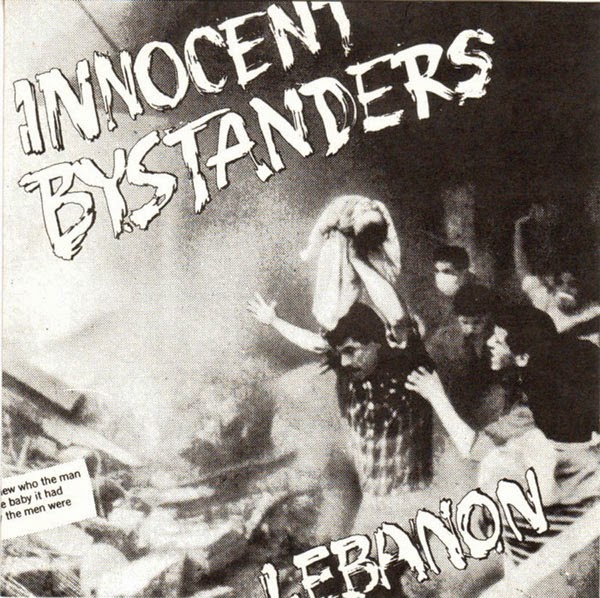
Innocent Bystanders - 1984 - Lebanon


Lebanon/Young Hearts


 At a time when cover bands dominated the Western Australian music landscape, "Bystanders" were one of the few original acts to make a dent and after a few years of hard work eventually pull very respectable crowds. Their Monday night residences at the Herdsman Hotel drew crowds of over 250 people, many of them music industry types there to listen to this powerful Australian band heavily influenced by Cold Chisel and Bruce Springsteen. The standout features were the depth of Keyser's songwriting and his powerful vocals and the amazing young teenage guitarist Mark Lizotte aka Diesel

The band's songs drew heavily from their local environment of beaches, hot summers, weekends down South and even the demolition of the Scarborough Beach Hotel. In addition Keyser soaked up many influences and ventured into the realm of story-telling with his songs.

In 1983 the band released a cassette entitled Live at the Subi, recorded at the Subiaco Hotel with a mobile recording truck.

In 1984 the band flew to Sydney and recorded their debut single, "Lebanon", with Peter Walker (Midnight Oil and Cold Chisel producer) with the lineup of Mark Lizotte (guitar), Brett Keyser (vocals), John ‘Yak’ Sherrit (drums), John ‘Tatt’ Dalzell (bass) and Cliff Kinneen (keyboards). The single reaching #98 on the Australian singles chart.

Innocent Bystanders travelled to Sydney to record their second single, "Dangerous", released in July 1986, which reached #97 on the Australian singles chart. They attracted the attention of hard rockers, The Angels, however Lizotte had already left the band in June 1986 taking Bremond, Dalzell and Sherritt, and they formed Johnny Diesel & the Injectors with George Dalstrom as a second guitarist. Keyser then recruited new players John Heussenstamm (guitar) and Al Kash (drums; ex-Blackfeather) and went on to record the band's first album, Don't Go Looking Back, which was released later in 1986 on the Chase label. reaching #59 on the Australian album charts.

Saturday, 2 May 2015

Meating - 1970 - Bad Luck Feeling


Bad Luck Feeling/Back Home


A 'supergroup' of top Melbourne-based musos Greg Lawrie (ex-The Creatures, Chocolate, Carson) and John Capek (Leo De Castro and Friends) got together with Matt Taylor (Bay City Union, Wild Cherries, Chain), Tim Piper and Yuk Harrison from Genesis, plus Trevor Courtney (ex-Chants R&B, Cam-Pact) in a one-off recording project called The Meating. The single they recorded together, Bad Luck Feeling / Back Home was released on Rebel in August 1970.

Ash - 1970 - Sable


Sable/Avignon


This Melbourne-based hard rock band, which operated between 1969-72, was strongly influenced by Hendrix, Led Zeppelin and Jethro Tull. There were three different lineups, the second (1971) included several members of noted Sydney band Lotus. The central member, and the only person common to all three lineups, was vocalist Criston Barker (also known as Criston Somerset) but the second lineup is also notable for the presence of drummer Derek Pellicci, who went on to play with Mississippi and LRB.

The Ash's debut single "Avignon" / "Sable", produced by John Farrar, is credited as one of the first locally-produced 45s to be released in a picture sleeve -- packaging which until then was usually only used for EPs.

The group also made a promotional film-clip for "Avignon". Criston has archived a copy on YouTube, and it can be viewed by clicking HERE

It was the inaugural release for the newly established Havoc label, which was set up by Melbourne jazz saxophonist Frank "The Lion" Smith and agent-manager Rod De Courcy. Although the label lasted only four years (folding ca. 1975 after Smith died suddenly in 1974) Havoc was notable for concentrating on new releases by Melbourne-based rock bands of the period, and their LPs, which were pressed in New Zealand, were renowned for their superior quality compared to the local product.
There was a major lineup change after the single came out, and by the time they recorded their next single the group consisted of Criston (vocals), Ron Hood (guitar), Gary "Boofhead" Porterhouse (bass) and Derek Pellicci (drums); Peter Gregory (ex The Expression) filled in on guitar for a short time.

The second Ash single "Midnight Witch" -- written by Doug Ford of The Masters Apprentices -- was produced by Havoc house engineer Gil Matthews (The Aztecs). I

However Criston says the band was disappointed both with the production and a perceived lack of commitment from the label, so he and Derek moved to Sydney, hoping to make a new start. There they hooked up with Kim Dawson (guitar) and Warwick Wilkes (organ) both formerly of Lotus, plus noted bassist Tim Partridge, to become the the third and final lineup of The Ash. They performed regularly at Whisky A Go-Go, Chequers and numerous other Sydney venues until the group ended in 1972.


1968-70
Criston Barker (aka Christon Somerset) (vocals)
George Edwards (guitar)
Dennis Johns (drums)
Ian Ryan (bass)

1970-71
Criston Barker (vocals)
Peter Gregory (guitar)
Ron Hood (guitar)
Gary Mason (bass)
Derek Pellicci (aka Derek Allen) (drums)
Gary Porterhouse (bass)

1971-72
Criston Barker (vocals)
Kim Dawson (guitar)
Warwick Wilkes (Warwick Ford) (organ)
Tim Partridge (bass)
Gary "Boofhead" Porterhouse (bass)
Derek Pellicci (drums)

Brian Cadd - 1973 - Alvin Purple


Alvin Purple/Some Time Man


Brian George Cadd (born 29 November 1946, Perth, Western Australia) is an Australian singer-songwriter, keyboardist and producer who has performed as a member of The Groop, Axiom, Flying Burrito Brothers and solo. Although he was briefly called Brian Caine in late 1966, when first joining The Groop, he is generally known as Brian Cadd.

Cadd produced fellow Australian acts, Robin Jolley, Ronnie Burns, Broderick Smith, Tina Arena and Glenn Shorrock; and established his own record label called Bootleg Records. He also composed or performed music for films, Alvin Purple, Alvin Purple Rides Again, Fatal Vision, The Return of the Living Dead, Vampires on Bikini Beach, Morning of the Earth and The Heartbreak Kid and for television Class of 74, The Midnight Special and Don Kirshner's Rock Concert. His songwriting for other acts includes The Masters Apprentices, Bootleg Family Band, Ronnie Burns, The Pointer Sisters and Little River Band.

Cadd's iconic status was acknowledged when he was inducted into the 2007 Australian Recording Industry Association (ARIA) Hall of Fame.

The single Alvin Purple made #29 on the Australian charts

Saturday, 18 April 2015

Clapham Junction - Emily on Sunday


Emily on Sunday/Good Time Music


This pop-psych group formed in 1968 and for a while ran its own nightclub called the Union Jack in Sydney, Australia. Several members originally haled from the U.K. and they took their name from Britain’s busiest railway station. Original personnel consisted of Dennis Laughlin (vocals), Sammy See (keyboards), Derek Lewis (guitar), Peter Noble (bass) and David Mills (drums).

The band won a local radio station's Battle of the Bands competition and the prize was the opportunity to record at Martin Erdman's studios on the Du Monde label. The result was a track written by the band "Emily On A Sunday" their only single. Erdman later remaked that the studio was like a grog shop with band drunk constantly during the recording session.

In early 1969, Laughlin and See left to form Sherbet and were replaced by Jim Willebrandt (vocals) and William Mahoney (vocals). It was this lineup that released one single (the outstanding ‘Emily On Sunday’ b/w ‘Good Time Music’) in late 1969.

Patsy Ann Noble - 1960 - I Love You So Much It Hurts


I Love You So Much It Hurts/Like I'm In Love


Patricia "Trisha" Ann Ruth Noble (born 3 February 1944) is an Australian singer and actress. Initially performing as Patsy Ann Noble, she was a teenage pop singer in the early 1960s, with regular appearances on the music and variety television series Bandstand. In November 1961, she released her biggest hit single, "Good Looking Boy", which reached the Top 10 in Melbourne and Top 20 in Sydney. At the Logie Awards for 1961, she won the 'Best Female Singer' from TV Week. By 1962, she had transferred to the United Kingdom and continued her singing career by releasing singles there. In 1965, Noble started her television acting career, and by 1967, she was using Trisha Noble as her stage name. By the 1970s, she had relocated to the United States and had guest roles in various television series including Columbo: Playback, Baretta and Buck Rogers in the 25th Century. In 1983, Noble returned to Australia where she also pursued a career as a theatrical actress. In 2005, Noble had a minor role in Star Wars Episode III: Revenge of the Sith as Jobal Naberrie – mother of lead character Padmé Amidala.

Sunday, 22 March 2015

John Rowles - Another Chapter


It Only Takes A Minute/Bluebird Lullaby/Devil Or Angel/Annabella/Good Thing When It's Gone/Another Chapter/Imitation Of Love/Marlena/Know The Feeling/Love Is Alive

John Edward Rowles OBE (born 26 March 1947) is a New Zealand singer. He was most popular in the 1970s and early 1980s, and best known in New Zealand for his song Cheryl Moana Marie, which he had written about his younger sister.

Rowles was born in Whakatane, New Zealand, and is part Māori. His father, Eddie Hohapata Rowles, played for the 1938 Māori All Blacks. His mother was Pākehā. He was brought up in Kawerau, in the North Island of New Zealand. Rowles' birth name was simply John Rowles; he added the middle name "Edward" after his brother of that name died at a young age.

Rowles is best known in New Zealand and Australia, though he has also performed in the United States, particularly Las Vegas, Nevada and Hawaii, where he was managed by Kimo Wilder McVay. In the United Kingdom he was best known for the hit "If I Only Had Time", which reached number 3 in the UK Singles Chart in spring 1968, and stayed in the chart for eighteen weeks. This was a cover version of the French song "Je n'aurai pas le temps" with which the French singer Michel Fugain, had a hit in 1967.

Rowles had another Top 20 hit in the UK with "Hush... Not a Word to Mary", also in 1968.


Tuesday, 24 February 2015

Darryl Stewart - The Stars Will Remember


I Found A Million Dollar Baby/All The Things You Are/Autumn Leaves/San Antonio Rose/A Nightingale Sang In Berkeley Square/Love Walked In/But Not For Me/Girl Of My Dreams/The Stars Will Remember/When I Grow Old To Dream/Lovely Lady/Memory Lane


Darryl Stewart was an Australian singer from Sydney.

Stewart Charted in the mid fifties with "A Man Called Peter" which was also featured in the film of the same name. Stewart had a very clear voice and was popular during the fifties and in the sixties.

He apparently spent some time in England appearing on several television shows and also working with Winifred Atwell's BBC TV show.

Stewart was known for singing Irish songs with organ accompaniment.The distinctive and dominant organ sound comes from none other than Australia's King of the Theatre Organ, Wilbur Kentwell.

The song "A Man Called Peter" became one of Australia's biggest hits of 1955.

The song was released in Australia on one of Festival Records earliest 45s, cat # SP45-684.
The flipside was "My Cathedral". The song reached # 2 in Sydney in the winter of 1955, a position it held for 3 weeks.It never made #1 as Festival released the 45 of "Rock Around The Clock" by Bill Haley & His Comets.

Also on some of his recordings backing was provided by Australia's foremost pre-rock & roll band leader, Les Welch.

Darryl Stewart's good looks once led to British sex bomb, Diana Dors, having an affair with him.


Thursday, 19 February 2015

Collette - Raze The Roof


That's What I Like About You/Ring My Bell/You Ain't Gonna Hold Me Back/Victim Of The Groove/Push/All I Wanna Do Is Dance/Ordinary Man/Party Time/Only You Can Do It/Hothouse


Sydney-based singer Collette Roberts first came to the nation's attention when she signed to CBS and issued a cover of Anita Ward's 1979 disco hit `Ring My Bell'/`Save Yourself' as her debut single. `Ring My Bell' reached #3 on the national charts in May 1989. Collette followed this up with two further hits, `All I Wanna Do Is Dance'/`Push' (#12 in August) and `That's what I Like About You'/`Hothouse' (#35 in December).

DJ Stephen `Pee Wee' Ferris (ex-Flotsam Jetsam) produced Collette's debut album Raze the Roof. In 1990, Collette returned to the studio with producer Mark S. Berry for her second album, Attitude, which produced the singles `Who do You Think You Are?' (#71 in October), `Upside Down' and a cover of Natalie Cole's `This Will Be' (1991). `Who do You Think You Are?' featured New Jack Swing beat stylings (a mix of funk, soul and hip hop) and its lyrics were aimed at Collette's critics.

Early in her career, Collette performed in bright fluorescent lycra clothing, especially bike shorts, bras, and braces. In 1990 she appeared with a new image of short hair and black clothing in an attempt to cast aside the bike shorts image and for her music to be taken more seriously. Collette appeared briefly as 'Ysabel' on Home and Away in early 1991. After her second album, Attitude (1991) and its singles yielded little commercial success, she retired from the music industry and pursued a career as a stylist and make-up artist. She appeared on Channel 7's Where Are They Now? in 2006, revealing that she does some volunteer work at Sydney's Taronga Zoo.


From MySpace:
Model-turned-pop-singer Collette became an Australian icon when she unleashed the gold-selling Top 5 single Ring My Bell, an Anita Ward cover, in 1989.

The infectious track caught on quickly and Collette became just as well known for her bright, fluorescent lycra clothing as her music, starting a trend of bike shorts, bras, and braces nation-wide!

Though sometimes touted as a one-hit-wonder, Collette in actuality had a handful of successful follow-ups. Ring My Bell was followed by the dancefloor hit All I Wanna Do Is Dance which reached No 12 on the Australian singles chart and further cemented Collette into Australian pop-culture with it's cheeky video. This video depicts three distinct segments in which Collette dances in fluoro vinyl against a cartoon backdrop, dances in leopard print against a space-age backdrop and finally, in her trademark lycra, dancing in a fountain and teaching the moves to random bystanders at Harbourside in Sydney.

That's What I Like About You followed on, as did Collette's debut album Raze The Roof of which she co-wrote most of the tracks.

Fans flocked to join the Collette fan-club and receive regular newsletter updates from the beautiful singer and to learn what she was like outside of the spotlight.

In 1990, Collette ditched her colourful, disposable-pop image and returned with a new look (short hair, black leather) and the first single from her second album, Who Do You Think You Are?

Who Do You Think You Are? provided a more "grown-up" sound and was followed by the singles Upside Down and This Will Be (Everlasting Love) and the album Attitude - showing a more serious side to the young singer.

In 1991, Collette appeared briefly as a character on Australian soap Home and Away named Ysabel - police constable Nick's girlfriend.

After the release of her second album, Collette eventually retired from the music industry and, after a hiatus overseas, pursued a successful career as a stylist and make-up artist. Collette also made a return to the world of modelling and continues to model in successful campaigns.

These days, Collette can also be found showing her love of animals as a volunteer at Sydney's Taronga Park Zoo.

Collette has recently made appearances on Where Are They Now? and What A Year! specials in addition to performing for hundreds of screaming fans at ARQ's Retrosexual night in June 2005 and at Mardi Gras Party 2007 - proving that Collette's fans are just as passionate about her as ever and that her music still makes people want to dance!

Thursday, 8 January 2015

Johnny O'Keefe - Johnny O'Keefe Live


Don't Let Me Be Misunderstood/Over The Mountain/I'm Counting On You/If I Had A Hammer/You Don't Have To Say You Love Me/Sing/Just A Closer Walk With Thee/New Orleans/She Wears My Ring/Shout/Right Now


Recorded in 1968 at the Playroom on the Gold Coast, always at his best in front of an audience the crowd seems appreciative of his performance.
Opening number "Don't let me be Misunderstood" is the standout track for me followed by the Dusty Springfield hit "You Don't Have To say You Love Me". The rest of the album has Johnny singing hits of old "Sing" "Right Now" and "Shout " among them.
Not bad for a live recording . This was originaly released on Calendar records in 1968 then again in 1973 on Summit this is the Summit release.