Translate

Wednesday, 17 January 2018

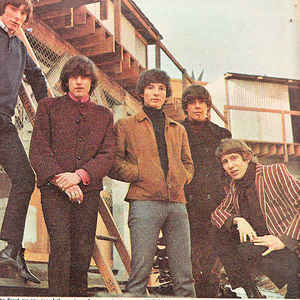
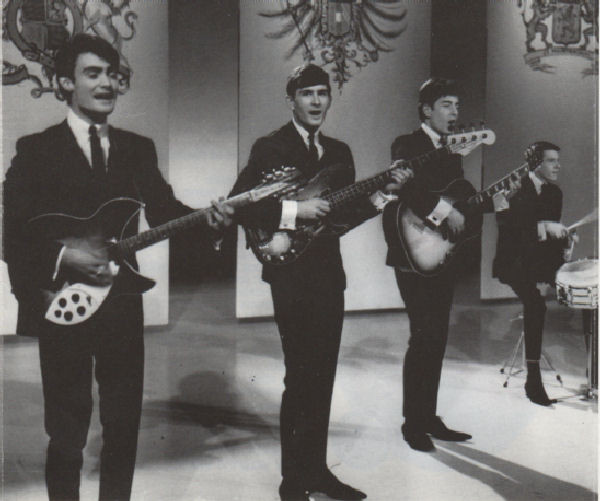
The Twilights - 1966 - The Twilights (1996) FLAC


Sorry She's Mine/La La La Lies/It's Dark/Diddy Wa Diddy/Long Life/Needle in a Haystack/You've Got Soul/Yes I Will/I'm Not Talking/Let Me Go/Lucky Man/Satisfaction


The Twilights formed in the satellite town of Elizabeth, 20 km north of Adelaide in South Australia, a town whose population in the 1960s was largely made up of families who had recently migrated from the UK, and all the original members were born in Britain. Like many other nascent pop bands, The Twilights were strongly affected by The Beatles' film A Hard Day's Night and other emerging British beat groups, notably The Hollies, The Who and The Small Faces, and they kept abreast of the latest trends with packages of records and tape recordings of Top 40 radio shows that they regularly received from relatives in Britain. Drawn together by their common origins and musical interests, singer Glenn Shorrock (hailing originally from Kent, UK), and his friends Mike Sykes and Clem "Paddy" McCartney (born in Belfast) formed an a cappella trio, eventually gaining regular bookings around the small Adelaide folk/coffee-house circuit.

Occasionally, and especially for more prestige engagements, this original vocal 3-piece teamed up with local instrumental outfits, including The Vector Men and The Hurricanes. Typical of the era, the Hurricanes had started out as a Shadows-style instrumental act, but the impact of The Beatles and other "British Invasion" bands saw many guitar bands around Australia recruiting lead singers and changing over to vocal-based material. The Twilights and The Hurricanes developed a solid bond, leading to the formation of the six-piece, fully electric-and-vocal group, The Twilights.

Still based in Adelaide, and originally self-managed and produced, the band released its debut single, "I'll Be Where You Are" on EMI's Columbia imprint in June 1965. A ballad written by Shorrock and Britten, the single gained some airplay in Melbourne but failed to chart outside Adelaide. Subsequent singles made further inroads – the second release, "Wanted To Sell", cracked the Melbourne charts and the third, the brisk, Beatles-styled Brideoake/Britten original "If She Finds Out" gave the band its first chart success in Melbourne, Sydney and Brisbane.

The Twilights quickly gained a strong reputation for their dynamic live shows in Adelaide. Early in 1965, drummer Frank Barnard left the group after the band hired Gary Spry as their manager. Barnard was replaced by Laurie Pryor, a well-known local drumming prodigy, who had previously played with another popular Adelaide band, Johnny Broome & The Handels. The new Twilights line-up with Pryor remained intact for the rest of the life of the band.

After taking over the group's management, Melbourne promoter Gary Spry realised that it was essential to establish the group in Australia's pop capital, Melbourne. The Twilights moved there in late 1965 where they took up a three-month residency at Spry's discothèque, Pinocchio's. Their reputation quickly spread around Melbourne; the club was sold out every night and they were soon being booked by all the major disco and dance promoters in the city.


The band's first recording after relocating to Melbourne was a version of the Animals song "Baby Let Me Take You Home", which marked the beginning of their successful collaboration with EMI house producer David Mackay; it gained a minor chart placing in Melbourne but made no impact in other cities. 

The Twilights fared much better with their next two releases. Their fourth single was a cover of Larry Williams' "Bad Boy" (June 1966), a track made famous by The Beatles; a video recording of the group performing this song on the pop program The Go!! Show has survived and can be seen on YouTube.

Their biggest national chart success came with their dynamic cover of the Velvelettes' "Needle in a Haystack" (August 1966). Although the group was reportedly not enamored of the song, manager Gary Spry insisted that they record it and it made the Top 10 in all Australian states. This was a notable achievement at the time—prior to late 1966 there was no recognised national pop chart and most Australia capital-city radio stations (especially in Sydney and Melbourne) were still highly parochial in their choice of material, rarely playing songs by acts from other states.

The popularity of "Needle in a Haystack" also took the single to the top of the new National Top 40 published for the first time in early October 1966 in Go-Set magazine. The single entered the inaugural 5 October chart at No. 14 and within two weeks it had shot to No. 1, becoming the first Australian recording to reach No. 1 on the Go-Set chart, out-charting overseas competitors including The Beatles "Yellow Submarine", Donovan's "Sunshine Superman" and The Lovin' Spoonful's "Summer in the City". It topped the Go-Set chart for two weeks in mid-October 1966, remaining in the chart for the rest of the year and into mid-January 1967.

Their follow-up single, "You Got Soul" entered the Go-Set chart on 18 January 1967 but was not as successful, peaking at No. 26 nationally. However, these successes, together with the release of their self-titled first album and numerous appearances on TV pop shows, cemented the band's status as one of Australia's most popular new groups.

 Their debut album, also produced by David Mackay, demonstrated the group's diversity as a recording unit and showcased their major influences. It featured several original tunes, songs specially written for them by Barry Gibb and Hans Poulsen, and covers of concert favourites including The Yardbirds' "I'm Not Talkin'", The Who's "La La La Lies", The Moody Blues' "Let Me Go", The Hollies' "Yes I Will" and The Rolling Stones' "(I Can't Get No) Satisfaction".

In July 1966 at Festival Hall, Melbourne, The Twilights competed in the first national final of the prestigious new pop band competition, the Hoadley's Battle of the Sounds, emerging as winners from a field of more than 500 groups. They were awarded bonus points for sound, originality, presentation and audience reaction. The competition rule which set maximum group membership at five meant that Paddy McCartney (half of the band's twin lead vocal line-up) had to sit out for the band's winning performance, but he returned to the stage for the winner's encore.

The competition first prize was a trip to the UK on the Sitmar cruise line and on 26 September 1966, the group embarked for London on the passenger liner Castel Felice.


As soon as they disembarked from at Southampton, the group made a bee-line for all the essential landmarks of Swinging London. They were soon sporting out the latest Mod hairstyles and Carnaby Street clothes and grew moustaches, emulating the new trend set by The Beatles. Although they had high hopes of success, they were dismayed by the quality of the British groups they encountered. 

One major achievement was the opportunity to play a week’s residency at Liverpool’s legendary Cavern club to an enthusiastic response. Thanks to their contract with EMI, the band also had the chance to record at the Abbey Road Studios, teaming with renowned producer-engineer Norman "Hurricane" Smith, who had been the engineer on almost all The Beatles 1962–1966 recordings and who went on to produce Pink Floyd's debut album (The Piper at the Gates of Dawn) and The Pretty Things classic psychedelic concept album S.F. Sorrow. The Beatles themselves were at that time recording their classic single "Penny Lane" and The Twilights were invited to sit in and observe their sessions.

A clutch of songs from the Abbey Road sessions were soon released back in Australia and in February 1967, their superb version of The Hollies' "What's Wrong with the Way I Live?" rapidly rose into the national Top 10. Composed specially for the Twilights by Graham Nash, Tony Hicks and Allan Clarke, the song exhibited a sophisticated sound that the band had only hinted at before. With its banjo motif and tight block harmonies, the recording earned plaudits from the composers themselves ("Much better than we did it!", Nash is said to have remarked) – and garnered support from other expatriate Aussie musicians like The Bee Gees, as well as earning encouraging airplay on pirate radio stations like Radio Caroline, where a number of expatriate Australian DJs were working. The B-side, "9.50", a driving Terry Britten psychedelic rocker, proved equally popular in Australia and was revived by Divinyls as a single B-side in the early 1980s.

For a short time it appeared that the single might make it into the British charts, but just as it was gaining airplay momentum it was derailed by the release of the Hollies' own version of their album, which EMI issued despite an earlier agreement not to do so. Extremely disappointed, The Twilights decided amongst themselves to return on the next boat home without telling Gary Spry, their manager, who was back in Australia. He reportedly rang to tell them that they had been booked to appear on "Top of the Pops", Britain's leading television pop show, only to find they had already been at sea for a week.

The third song recorded during the Abbey Road sessions provided the next Australian A-side. "Young Girl" was a melancholy and evocative Laurie Pryor tune featuring Terry Britten's innovative use of the variable volume pedal.


The changes in looks, attitude and musical accomplishment evident in the band upon its return to Australia were exemplified by the increasing dominance of lead guitarist and songwriter Terry Britten. Of all the Twilights, the Manchester-born Britten most fully absorbed the kaleidoscopic influences on offer in the musical melting pot of London. His rapid creative growth during this time saw him assume the role of chief songwriter and leader. Like his hero George Harrison, Britten embraced elements of Eastern philosophy and religion, and he introduced exotic instruments and musical forms into The Twilights' music, such as his use of the sitar as a lead instrument on the B-side of the "Young Girl" single, a social observation called "Time And Motion Study Man".

The last single from the group in 1967, "Cathy Come Home" b/w "The Way They Play", also featured the sitar prominently on both sides, and unusually for the time it was issued in a two-colour picture sleeve. The A-side was inspired by the BBC-TV play of the same name and top promote it they filmed one of the earliest Australian music video clips. The single was another airplay and chart success, but it was the last major hit that the band enjoyed. "Cathy Come Home" also began a trend in which Britten wrote songs inspired by movies or TV shows, which continued through his later writing. He wrote a song for Ronnie Burns, around another Aussie-produced film, Age of Consent, which was submitted but rejected for the soundtrack of the Michael Powell film of the same name, and he released his own solo single in 1969, again inspired by a current movie, Tim Burstall's 2000 Weeks.

In concert the group continued to impress. Thanks to a precious acetate of the album which they brought back from London, The Twilights were playing the whole of The Beatles' Sgt Pepper album live, in order, from start to finish, weeks before its official release in Australia. Staff at EMI are reported to have demanded that the Twilights desist, fearing their flawless performance might actually harm sales of the album when it was finally issued in June.


This year began promisingly for the Twilights with the chart success of "Cathy Come Home" and this was consolidated by an invitation from the Seven Network to develop a weekly television sit-com series, showing the group at work and play, based on the success of The Monkees television series and the Beatles' A Hard Day's Night film.

Go-Set magazine documented the making of the pilot for the series, called Once Upon A Twilight, with photos of the group on location around Melbourne with their co-stars, comedian Mary Hardy (playing the role of the band's secretary) and a youthful Ronnie Burns. However, the program's sponsor, the Ford Motor Company, withdrew its support later in the year and the project was cancelled, although it did inspire what was to become the Twilights' most notable recording achievement.

The music the group had intended for the soundtrack to the shelved series took on a life of its own. After long gestation period, interspersed with the band's most concentrated regime of live touring yet, they produced what many critics now regard as one of the best Australian pop albums of the era, Once Upon A Twilight.

The album set new standards in Australia for pop album production and packaging – it was one of the very first Australian pop LPs to be released in both mono and stereo and was also issued in a lavish gatefold cover which included die-cut pop-up figures of the band members. The track listing included compositions by several band members – Peter Brideoake's plaintive cello and horn-embellished "Tomorrow Is Today" and Laurie Pryor's raucous comedy song "The Cocky Song" as well as several new Terry Britten songs. As main songwriter he provided lush settings for Shorrock, including the title track "Found To Be Thrown Away" and also "Paternosta Row" (which featured heavily processed lead vocals), plus delicate arrangements for Paddy McCartney's featured number, "Bessemae". Britten sang lead vocals and almost solo instrumentation on "Mr Nice" and "Devendra", the latter featuring an arrangement of Indian string and percussion reminiscent of George Harrison's "Within You, Without You". Throughout the LP, the group explored the most up-to-date arrangements and techniques available—exotic instruments, brass sections, string quartets, wah-wah guitar, feedback, Keith Moon-styled drum patterns, reverse tape effects, stereo panning and electronically treated vocals.

Once Upon A Twilight was initially pressed in mono only, as the stereo mix commissioned in America was delayed. An anecdote recorded by rock historian Glenn A. Baker says that Linda Ronstadt and her band, the Stone Poneys (including Anglophile songwriter Andrew Gold and future Eagle Glenn Frey), were recording in an adjacent studio and heard some of the mixing sessions. Impressed with the quality of the songs and performances, Ronstadt and her manager apparently lobbied to secure American release for the Twilights on Capitol records.


 Concurrent with the release of the album came the group's eleventh single, "Always", recorded during the same sessions. Both the LP and the single, however, fared poorly on the charts, signalling the beginning of a downturn in the group's fortunes.

Nevertheless, 1968 was the band's peak year as a performing unit. They remained one of the biggest drawcards on Melbourne's thriving dance and disco circuit. Popular venues such as Sebastian's, Bertie's, Pinnochios, Catcher, The Thumpin' Tum and Opus played host to some of the most polished stage shows by an Australian band yet witnessed. The group were the envy of local musicians due to the fact that they were one of the first bands in Australia to be equipped with the new British-made Marshall amplifiers (made famous by Jimi Hendrix) and the combination of their powerful stage sound, impeccable presentation and tight musicianship .

The Twilights' shows at the time also had a prominent comedy and slapstick element. Glenn Shorrock frequently adopted a comedic alter-ego, "Superdroop", dressing in a shabby super-hero jumpsuit (which can be seen in the "Cathy Come Home" film clip) and he was also notorious for terrorising audiences by leaping out from backstage dressed in a gorilla suit, sometimes swinging precariously on a trapeze over the crowd. Alongside their own material and selections of popular Motown and soul classics, the group also regularly performed powerful cover versions of recent hits, such as Cream's "Sunshine of Your Love", Traffic's "Dear Mr. Fantasy", Hendrix's "Purple Haze", the Small Faces' "Tin Soldier" and the Move's "Night of Fear". Their live renditions of such songs were often said to equal or surpass the original recordings and many of their fellow musisians are on record as rating the Twilights as their favourite local live band of the period.

 The Twilights' next single, "Tell Me Goodbye" / "Comin' On Down" (August 1968), was recorded at Armstrong's Studios in Melbourne and proved to be their last collaboration with longtime producer David MacKay, but it was largely ignored by radio and the public and failed to chart.

By late 1968, however, internal frictions were growing—the group were disillusioned by the dwindling interest of their label and the consequent lack of chart success and were also growing tired of the constant and gruelling routine of live performance; at that time it was common for popular local acts to play multiple nightly appearances (often as many as five or more every night) at dances and discotheques. Their situation was further complicated by the loss of manager Spry, who had quit as manager in mid-1968 due to the band's insistence that he relinquish his other activities to concentrate on the Twilights—by this point Spry was concurrently running his discotheque, managing two other acts (The Groove and the female vocal group Marcie and the Cookies) as well as operating his AMBO booking agency.

November saw the release of their swansong record, this time produced by an expatriate New Zealander, Howard Gable, who had recently taken over as EMI's house producer from the departing Mackay who had taken up a position at EMI's London head office. "Sand in the Sandwiches" attempted to purvey a jaunty and frivolous "let's all head off for the beach" theme but failed to achieve its intention; even rock historian and self-confessed Twilights fan Glenn A. Baker later described it as "abysmal". By contrast, the b-side, "Lotus", showcased all the band's strengths, but again it gained little airplay and sales were negligible.


The final break came when preparations for a second trip to the UK were thwarted when Laurie Pryor refused to participate, leading to his resignation from the group. Disappointed and dejected with their recent lack of progress and perceived loss of popularity, the group decided then to disband, announcing a series of final live appearances in Sydney and Melbourne.

After the shock announcement of the break-up in the 22 January Go-Set' issue, The Twilights gave their last NSW concert performance at The Trocadero in Sydney. They were a last-minute inclusion in the Ray-o-Vac Batteries Spectacular, which featured an all-star line-up including The Groove, Johnny Farnham, The Dave Miller Set, The La De Das, Heart'n'Soul, Respect, Clapham Junction and The Executives, with comperes Ward Austin and Dal Myles. Five thousand fans attended, with thousands more reportedly turned away. Their last Melbourne concert was at Bertie's Discotheque.


New Link Added 27.10.2020

Monday, 15 January 2018

Dom Mariani - 2009 - Rewind and Play FLAC


Melt/Know You Now/For Always/Take It All/Just Like Nancy (Girl In Boots)/Sunshine's Glove/Show You/Everything That You Told Me/Here Comes The Night/When It Ends/Second Floor/Undying Love/At First Sight


Emerging from arguably the world’s most isolated capital Perth Western Australia, Dom Mariani is a rock and roll stylist whose career has been a resplendent one in the creative stakes – a songwriting road that has never wavered from excellence. With a serious interest and love of underground 60’s garage rock, classic pop, power pop, soul and R&B, Dom would form one of Australia’s most loved and respected bands of the mid to late 80’s THE STEMS. From their formation in the early summer of late 1983 to the end of 1987 THE STEMS with Dom at the helm as singer, songwriter and lead guitarist steadily infiltrated Australian radio, press and alternative charts, winning the hearts of critics and a legion of loyal fans. A succession of classic singles and a chart topping LP “At First Sight-Violets are Blue” stirred interest as far a field as Europe and the US. But foremost it was his ability to write great songs and the bands electric live shows that made them stand out from the rest.

 After the demise of the THE STEMS and a short playing stint with THE SUMMER SUNS Dom would eventually return in 1990 with the THE SOMELOVES, a studio collaboration with friend Darryl Mather (Lime Spiders, Orange Humble Band) who’s first and only LP of guitar driven pop “Something or Other”, is considered as minor pop masterpiece by critics and fans alike. The album went on to win seven “WAMI’s” (Western Australian Music Industry Awards) in 1990, with Dom also collecting the most outstanding songwriter award.
                                                                                                         The Stems

However, the promise of the Someloves was short lived and contractual problems would not see a new release from Dom for another 3 years. A Return to live gigging during this time would play a big part in Dom’s resurgence in the music scene in the 90’s. Having finally secured a release from his record deal at the end of ‘92, the beginning of ‘93 would see the start of a new era for Dom and his new band DM3 as one Australia’s greatest exponents of guitar driven pop (referred to by aficionados as Power Pop). The debut single “FOOLISH” was released in April ’93 and heralded his return with another loud, tight, electric rock‘n‘roll outfit. The song would also take out the most outstanding single of that year at the WAMI awards. DM3’s first LP “ONE TIME TWO TIMES THREE RED LIGHT”(1993) mixed by legendary American producer MITCH EASTER (REM, PAVEMENT, SON VOLT, LETS ACTIVE, VELVET CRUSH) received widespread critical acclaim and sold throughout Australia, Europe and the US and was followed by European tours in ‘94 and ’95.

                              DM3
It would be another 3 years before DM3 were to release their second LP “ROAD TO ROME” (also mixed by Mitch Easter). Praised by critics of guitar driven pop in Australia, Europe and the US as one of the best albums for ’96 of it’s genre. Their fusion of melodic pop hooks, cool vocals and high energy rock’n’roll guitar earned them high praise and many new fans. In the same year they embarked on another successful European tour playing to packed houses across Spain, France and Scandinavia. 1998 would see the release of “RIPPLED SOUL”, the 3rd album from DM3. A more diversely structured album, the album was also well received by fans and critics alike in Australia, Europe and US. 2 more albums, an EP and 7inch single were also released between 1999-2001. These 2 albums titled “GARAGE SALE Vol. 1” and “GARAGE SALE Vol. 2 – ITALIAN STYLE” collected previously unreleased tracks, non album b-sides, alternate mixes, odd covers, live and songs previously only available on 7 inches. The Just Like Nancy EP which was eventually compiled onto GARAGE SALE Vol. 2. DM3 would eventually split in at end of ’99 after touring Spain, France and Germany to return briefly for a short tour of Italy in March of 2001. He released his first solo album in “Homespun Blues and Greens” in 2004.

Dom has continues to tour Europe where he continues to be a popular draw card with the Stems in 2003 and as a solo artist on the release of his Anthology “Popsided Guitar” in 2005. The Stems were also invited to play the prestigious Little Steven’s Underground Garage Festival in August of 2004 alongside rock legends The Stooges, Bo Diddley, The New York Dolls, Nancy Sinatra and the Stokes to name but a few, and with the Stems he has just released a new album title ”HEADS UP”.

New Link Added 01.07.2021

Monday, 8 January 2018

Sports - All Sports FLAC


Boys! (What Did The Detective Say?)/Walk In The Room/Reckless/Don't Throw Stones/Suspicious Minds/Live Work And Play/Big Sleep/Who Listens To The Radio/Wedding Ring/The Lost And The Lonely/Perhaps/Strangers On A Train/Black Stockings (For Chelsea)/Blue Hearts/Stop The Baby Talking/How Come  


 The Sports were formed in 1976 by Stephen Cummings who was the lead singer of Melbourne rockabilly group, The Pelaco Brothers, (which also comprised Joe Camilleri, Peter Lillie and Johnny Topper). The original line-up were Cummings and ex-The Pelaco Brothers band mate, Ed Bates, on guitar, Robert Glover (ex-Myriad) on bass guitar, Jim Niven (ex-The Captain Matchbox Whoopee Band) on piano and Paul Hitchins on drums. Their early sets contained covers of Chuck Berry, Billy Emerson, Don Covay, Company Caine and Graham Parker material. Original songs, mostly written by Cummings and Bates, completed their sets. The Sports' debut recording was a four-track extended play, Fair Game, which was released in early 1977 on the independent label, Zac Records. A friend in London posted the record to the New Musical Express (aka NME) which declared it 'Record of the Week'.


The Sports were in tune with music trends dominating London rock and had provided song-based rock as an antidote to punk, which was dubbed new wave. Cummings was compared favourably with Mick Jagger and Bates was praised for his slide guitar style: being similar to Little Feat. "We were totally surprised," Cummings said in 1997 of the NME review; he continued, "It was the last thing you'd expect. It was my making and my undoing in some ways. When you have everything go right so quickly you expect that everything after that is going to be good and that easy. It meant that I probably didn't put myself out as much as I should have."

Andrew Pendlebury (ex-Myriad) joined on guitar in August 1977 and assisted Cummings with song writing. Cummings recalled, "I just vaguely met people and dragged them into it. I always wanted Andrew in the group as a guitarist and I had an idea for a rockabilly country sound. But I always wanted to change it because I really liked the MC5 and wanted to make it more like that as well." In May 1978 The Sports issued their debut studio album, Reckless, on Mushroom Records with ex-The Pelaco Brothers band mate, Camilieri, as their producer. 

The lead track, "Boys! (What Did the Detective Say?)", was released in March 1978 and peaked at 55 on the Australian Kent Music Report Singles Chart. In England it provided some confusion with the similarly titled, "Watching the Detectives", by Elvis Costello, which had been released in the previous October.
In August 1978 Cummings brought in Martin Armiger (ex-Toads, Bleeding Hearts, High Rise Bombers) on guitar, vocals and for song writing, to replace Bates. According to McFarlane, Bates had been "ousted" as Armiger "had a more commercial outlook". On the strength of Reckless, The Sports were chosen to support Graham Parker & the Rumour's Australian tour later that year. Parker arranged for The Sports to support their United Kingdom tour in February of the following year. Fellow Australian musician Keith Shadwick accompanied the band on the tour and wrote an extensive account for the Australian music magazine Roadrunner.

In November, they started work on their second album, Don't Throw Stones, with Pete Solley and Dave Robinson producing. It was released in February 1979 ahead of their joining Graham Parker & the Rumour's UK tour. While in the UK they recorded another four-track EP, O.K, U.K!, which appeared in August that year.

 Don't Throw Stones reached No. 9 on the Kent Music Report Albums Chart, which provided two top 40 singles, "Who Listens to the Radio" (November 1978) and the title track (March 1979). "Who Listens to the Radio?", was their only hit on the United States Billboard Pop Singles chart, peaking at No. 45 in November 1979. Stiff issued material from the first two Australian albums under the name, Don't Throw Stones, in October 1979; while Arista Records released it in the US and continental Europe.

The group's third album, Suddenly, was released in March 1980 and was also produced by Solley. In Australia, the album reached No. 13 and its lead single, "Strangers on a Train", peaked at No. 22. Before the album had appeared Hitchins was replaced by Iain McLennan (ex-Ariel, Mondo Rock) on drums and Niven was replaced by Red Symons (ex-Skyhooks) on keyboards. To promote the album, in March and April 1980, The Sports undertook a national tour with Mushroom label mates, Split Enz. Symons left after the tour and McLennan, who had hepatitis in May, was then replaced by Freddie Strauks (Symons' band mate from Skyhooks) on drums.

 In 1981, the Sports had another top 30 hit on the Australian singles chart with "How Come"; and a top 20 album with Sondra. The Sports broke up late in 1981 with Cummings going on a solo singing career; Armiger became a composer for film and TV after moving to Sydney; Pendlebury joined The Dugites; Strauks joined Jo Jo Zep & The Falcons; and Glover was in Wilbur Wilde's backing band. In October 2010, their 1979 album, Don't Throw Stones, was listed in the book, 100 Best Australian Albums

Sunday, 7 January 2018

Swanee - 1984 - Days Gone By FLAC


01 Crazy Dreams 
02 Tough at the Top 
03 Temporary Heartache 
04 Tin Soldier 
05 If I Were a Carpenter
06 Mathew 
07 Motordown Tonight 
08 Ol' Rosie 
09 Sail Away 
10 Lady,What's Your Name 
11 Days Gone By 
12 Beware of the Animal  


 John Swan, more commonly known as Swanee, was born John Archibold Dixon Swan in 1952 in Glasgow, Scotland. He came to Australia with his family in 1961 and is the only one of his siblings to keep his natural fathers surname. He is the older brother of Jimmy Barnes and the uncle of David Campbell.

Swanee started his musical career as a drummer in the band Happiness before moving on to other bands such as Fraternity, Feather and Cold Chisel. He branched out on his own, under the name Swanee, in 1979, releasing the album “Into The Night”. His first commercial hit was in 1981 with his version of “If I Were A Carpenter” off the album “This Time Is Different” which featured two other hits, “Temporary Heartache” and “Lady What’s Your Name”

In 1987 he replaced angry Anderson as lead singer in Paul Christie’s “Party Boys” where he had another hit with “He’s Gonna Step on You Again” and then “Hold Your Head Up”. He left the band around 1989 to again pursue a solo career that still persists today.

Friday, 29 December 2017

Steve & The Board - 2000 - ... And The Giggle Eyed Goo FLAC


01 The Giggle Eyed Goo    
02 I'm To Blame    
03 Rosalyn    
04 I've Just Realised    
05 Margot    
06 Rosemarie    
07 I Want    
08 I Call My Woman Hinges (Cause She's Something To Adore)    
09 Little Miss Rhythm & Blues    
10 Farmer John    
11 Love Has Made A Fool Of You    
12 Lonely Winter    
13 Now I'm Older    
14 So Why Pretend?    
15 Good For Nothing Sue    
16 Sally Was A Good Old Girl


The Australian band Steve & the Board made some decent if derivative British Invasion-style records in the mid-'60s, getting some success in Australia with the singles "The Giggle Eyed Goo" and "I Call My Woman Hinges 'Cause She's Something to Adore." All the members were in their late teens when they recorded for the Spin label, and their progress was no doubt eased by having a lead singer, Steve Kipner, whose dad Nat Kipner was the head of Spin Records. The group wasn't a mere manufactured boy band, though, as in fact much of their material was original, contributed by several members (though most often guitarist Carl Keats)


. In their blend of British R&B and pop/rock influences, their recordings were fairly solid straight-ahead rock that criss-crossed attributes of the Beatles, the Byrds, Merseybeat, and raunchier groups like the Pretty Things. They issued just one album, though, and a couple of non-LP singles. All of their sides are available on the Ascension CD reissue of the Steve and the Board ...and the Giggle Eyed Goo album, which adds the non-LP 45 cuts.

Steve & the Board's album had included a Barry Gibb song the Bee Gees never released, "Little Miss Rhythm & Blues," and one of the Keats songs on the LP, "Lonely Winter," would be recorded by the Bee Gees.


The Bee Gees connections would continue in some other post-Steve & the Board careers, and in fact might be what the band is most known for. Drummer Colin Peterson would join the Bee Gees for a while in the late '60s; his replacement in Steve & the Board, Geoff Bridgeford, would himself be in the Bee Gees in the early '70s. Steve Kipner went on to be part of Tin Tin, which had a number 20 hit in 1971 with "Toast and Marmalade for Tea," and recorded a late-'70s solo album for Elektra. He's more well-known, though, as a mainstream pop songwriter, his most successful creation being "Let's Get Physical."

Friday, 15 December 2017

The Strangers - 1998 - Best Of The Strangers FLAC

01 Happy Without You    
02 Take The Time    
03 Lady Scorpio    
04 California Soul    
05 Sweet September    
06 Paper Cup    
07 Will You Love Me Tomorrow    
08 Elenore    
09 I Can Hear Music    
10 I Say A Little Prayer    
11 Paperback Writer    
12 Bend Me, Shape Me    
13 Melanie Makes Me Smile    
14 If You Think You're Groovy    
15 Mr President    
16 Looking Through Eyes Of A Beautiful Girl    
17 Sweet Water    
18 Tennessee    
19 Windows Of Your Eyes    
20 Little St. Nick    
21 Standing In The Shadows Of Love    
22 I've Got You Under My Skin    
23 Proud Mary    
24 Sandy    
25 Do It Again    
26 Good Vibrations

The Strangers were an Australian band based in Melbourne, that existed from 1961 to 1975. The band started out playing instrumental songs in a style similar to The Shadows, with influences from Cliff Richard. The original line-up included Peter Robinson (bass), Graeme ('Garth') Thompson (drums), Laurie Arthur (lead guitar) and Fred Weiland (rhythm guitar). Robinson had previously played with The Thunderbirds, and went on to replace Athol Guy in The Seekers from the late 70s.

At the end of 1962 they signed with Ron Tudor's W&G Records, after working as the studio band for artists including The Seekers, Frankie Davidson, Johnny Chester, Merv Benton, Little Gulliver and the Children, Pat Farrar and Joy Lemmon. Arthur left the band in early 1964, and was replaced on lead guitar by John Farrar.

 In 1964 they supported Colin Cook and released an LP called Colin Cook and the Strangers. The first charting record in The Stranger's own name was Cry of the Wild Goose (an instrumental by Terry Gilkyson) / Leavin' Town, which was released in January 1963 and reached number 12 on the Melbourne charts. This was followed by three original instrumentals, Torlido, The Outcast and Undertow, which were released in 1963, two of which reached the Top 40. Other singles included Happy Without You (Kenny Laguna, Shelley Pinz, 1968), Melanie Makes Me Smile (Tony Macaulay, Barry Mason, 1970), Looking Through the Eyes of a Beautiful Girl (1970), If You Gotta Make a Fool of Somebody (Rudy Clark, 1965) and "Western Union" (Mike Rabon, Norman Ezell, John Durrill, 1967).


 Also in 1964, the band supported Roy Orbison and Paul and Paula on an Australian tour which featured The Surfaris and The Beach Boys. These support gigs influenced some early vocal recordings in Poppa Oom Mow Mow, Sunday Kind of Love, If You Gotta Make a Fool of Somebody and later In My Room, a Beach Boys ballad.


 In August 1964, The Strangers were selected as the resident backing band on the Melbourne based teenage television pop program The Go!! Show, in which they appeared each week from 1964 to 1967. Farrar married Pat Carroll. Carroll and Olivia Newton-John appeared on The Go!! Show as singers. After "The Go!! Show" ended, The Strangers became the resident group on HSV-7's Sunnyside Up program. In all, the band appeared on television at least once a week for nine years straight.

During the mid-1960s, the band changed labels from W&G Records to Go Records. After the demise of the Go!! Show and its associated record label, they moved to Philips Records, and finally to Fable Records in 1970. 


In February 1967 Terry Walker (ex Glen Ingram & The Hi-Five) replaced Fred Weiland, who left to join The Mixtures. During 1969, The Strangers' cover of Melanie Makes Me Smile made #16 in Sydney, #9 in Melbourne and #7 in Brisbane. Later singles included Mr. President (Trevor 'Dozy' Davies, John 'Beaky' Dymond, Ian 'Tich' Amey) in 1970, and Sweet Water (Fletcher/Flett), a cover of a song by obscure British band Brass Monkey, in 1971.

The group effectively broke up in mid 1970, with Farrar moving to the UK and joining Shadows members Hank Marvin and Bruce Welch in Marvin, Welch & Farrar, and then the re-formed Shadows. Later that year Robinson and Thompson reformed The Strangers (sometimes billed as The New Strangers) with guitarists John Cosgrove (ex Fendermen) and Bill Pyman. Cosgrove left in early 1973 and was replaced by Jim Sifonious (ex Dove), before the band finally broke up in 1975.

Throughout the group's 14 years, The Strangers provided backing for many local and overseas acts. These included: Johnny Farnham, Russell Morris, Johnny Young, Neil Sedaka, Johnny O'Keefe, The Seekers, Merv Benton, Ted Mulry, Lynne Randell, Ross D. Wylie, Yvonne Barrett, Grantley Dee, Pat Carroll, Little Gulliver, Barry Crocker, Buddy England, Ronnie Burns, Town Criers, Masters Apprentices, Axiom, Hans Poulsen and Lionel Rose.

 The Strangers set an exceptional standard for live sound, using the best and 'cleanest' equipment they could procure: German Dynacord microphones and public address systems, multiple guitar effects units, an exponential horn for the bass guitar, and carefully selected and matching guitars (e.g. Rickenbacker 6 and 12 string, and Maton El Toro) and amplifiers.

Farrar later moved to the USA, and has written and produced a number of hits for Olivia Newton-John, including Hopelessly Devoted to You, Have You Never Been Mellow and Magic.

Thursday, 14 December 2017

Rose Tattoo - 1982 - Scarred For Life FLAC


Scarred for Life/We Can't Be Beaten/Juice on the Loose/Who's Got the Cash/Branded/Texas/It's Gonna Work Itself Out/Sydney Girls/Dead Set/Revenge


 Rose Tattoo is an Australian rock and roll band, now led by Angry Anderson, that was formed in Sydney in 1976. Their sound is hard rock mixed with blues rock influences, with songs including "Bad Boy for Love", "Rock 'n' Roll Outlaw", "Nice Boys", "We Can't Be Beaten" and "Scarred for Life". Their first four albums were produced by Harry Vanda and George Young who also worked with AC/DC. They disbanded in 1987, subsequently reforming briefly in 1993 to support Guns N' Roses on an Australian tour. They reassembled again from 1998 and have since released two more studio albums.

Scarred For Life is the third album by Australian hard rock band Rose Tattoo. Scarred For Life launched Rose Tattoo to international success with the rock anthem "We Can't Be Beaten." A video was filmed for the song "Branded." "We Can't Be Beaten" was covered by the Swiss thrash metal band Drifter on their 1989 album Nowhere To Hide.
 

Personnel

    Angry Anderson - Lead vocals
    Peter Wells - Slide Guitar & Vocals
    Rob Riley - Lead & Rhythm Guitar
    Geordie Leach - Bass
    Dallas "Digger" Royall - Drums

Sunday, 3 December 2017

Original Cast Recording - 2001 - Shout! The Legend Of The Wild One


01 David Campbell - Sing (And Tell The Blues So Long)    
02 David Campbell - Wild One (Real Wild Child)    
03 David Campbell - Cry    
04 David Campbell,Tamsin Carroll - Save The Last Dance For Me    
05 David Campbell,Kevin Murphy - Rock And Roll Will Stand    
07 David Campbell - Move Baby Move    
08 Tamsin Carroll - Crazy    
09 David Campbell - (The) Sun's Gonna Shine Tomorrow    
10 Trisha Noble - He Wears My Ring    
11 David Campbell - She's My Baby    
12 David Campbell,Tamsin Carroll - Ready For You    
13 Paul Biencourt - Get A Job    
14 David Campbell - Hit Record    
15 Tamsin Carroll - Chapel Of Love    
16 David Campbell - I'm Gonna Knock On Your Door    
17 Sara Highlands,Carly O'Rourke,Eve Prideaux - Holdin' You In My Holden    
18 David Campbell,Trisha Noble,Katie McCarthy - Mockingbird    
19 David Campbell,Tamsin Carroll - I'm Counting On You    
20 David Campbell - So Tough    
21 Shout!" Cast - Tourin' Time    
22 David Campbell,Aaron Blabey - Purple People Eater/Witch Doctor    
23 David Campbell,Kurt Sneddon - Mr Bass Man    
24 Anton Koritni - Bye Bye Baby    
25 David Campbell - She Wears My Ring    
26 David Campbell - Rock Around The Clock    
27 David Campbell - What'd I Say    
28 David Campbell - Shout!


Shout! The Legend of the Wild One is an Australian musical based on the life of Johnny O'Keefe. It premiered in Melbourne at the State Theatre in December 2000, before seasons in Sydney, Adelaide and Brisbane through 2001.

The original production was directed by Richard Wherrett and featured David Campbell as O'Keefe.  Each was nominated at the 2001 Helpmann Awards, for Best Direction of a Musical and Best Male Actor in a Musical respectively. The original production was remounted for a national tour in January 2008 starring Tim Campbell as O'Keefe. 

In the mid 1970s Johnny O'Keefe takes his new fiancé to see the Sydney Stadium before it is demolished. He begins to reminisce about his life, growing up in Sydney and falling for Marianne, a German immigrant. When he hears Rock Around the Clock by Bill Haley and the Comets he discovers a passion for rock music and persuades Lee Gordon to promote him.

O'Keefe becomes famous and successful. But he is involved in a car crash and fails to crack the US market. He and Gordon fall out, his marriage collapses and Gordon dies.

However O'Keefe makes a comeback in the 1970s.

Shout! The Legend of The Wild One original cast recording was released in March 2001. The album was certified gold in Australia. It received the ARIA Award for Best Original Cast/Show Album in 2001

Thursday, 23 November 2017

Windchase - 1977 - Symphinity (2000) FLAC


1 Forward We Ride 
2 Horsemen to Symphinity 
3 Glad to Be Alive 
4 Gypsy
5 No Scruples
6 Lamb's Fry 
7 Non siamo perfetti 
8 Flight Call
 
Bonus Track
9 Horsemen to Symphinity (Live)  


This is basically Sebastian Hardie in all but name only. The Plavsic brothers left, apparently along with the Sebastian Hardie name (as neither Mario Millo nor Toivo Pilt were original SH members when the band formed). Both Mario and Toivo found themselves with new drummer Doug Bligh, and bassist Duncan McGuire, and decided to name the band Windcase, after Sebastian Hardie's second (and final) album. 

The group decided to go a more proggy Santana route here, most demonstrated on "Horsemen to Symphinity". Here Mario Millo's guitar playing isn't too different from Carlos Santana, while Toivo Pilt's keyboard playing isn't too different from Gregg Rolie. "Glad to Be Alive" is a ballad, at times reminding one of ELO (similar vocal harmonies, not to mention strings). "No Scruples" is a great piece, especially the use of Moog, Mellotron, and string synths. "Lamb's Fry" is an instrumental, fusion-influenced piece. Mario Millo, showing us his Italian heritage gives us "Non Siamo Perfetti", where he does Italian-influenced acoustic renditions of themes from "Rosanna" (from Four Moments) and "Windchase" (the Sebastian Hardie album). "Flight Call" is another ballad. Many people tend to look down on this album in comparison to Four Moments, because the inclusion of two soft rock songs, "Glad to Be Alive" and "Flight Call", the rest is rather excellent progressive rock.

Tuesday, 21 November 2017

Merv Benton - Come On And Get Me


A1 (I Do The) Shimmy Shimmy    
A2 Mess Of Blues    
A3 Lotta Lovin'    
A4 Cincinatti Fireball    
A5 Twenty Flight Rock    
A6 Come On And Get Me    
B1 Baby, Let's Play House    
B2 Nervous Breakdown    
B3 Love Me Tender    
B4 Pretty Girls Everywhere    
B5 Don't Leave Me Now    
B6 Honey Don't


 The Merv Benton story is a fascinating chapter of the Beat Boom in Australia. From his base on the Melbourne dance circuit, Merv gained national attention and quickly became one of the most popular male singers in the country. In early 1964 he signed with Melbourne's W&G Records and became one of their most prolific artists, releasing seventeen singles, six EPs, and three LPs between 1964 and 1967, and scoring an impressive run of fifteen Top 40 singles in his hometown (several of which also charted in other cities). But in 1967, at the height of his popularity, Merv was struck down by throat problems that ended his singing career.

 Merv (real name Mervyn Bonson. b. 12 August 1942) grew up in the Melbourne suburb of Reservoir and went to school at Preston High, where he was an enthusiastic tennis player. After he left shool he joined a major Victorian bank as a trainee but as a teenager he listened avidly to rock'n'roll on Melbourne radio and was captivated by the music of Elvis Presley, Sam Cooke, Gene Vincent, Chuck Berry, Little Richard and Jerry Lee Lewis. Merv saw his first Lee Gordon 'Big Show' in 1957, which featured Bill Haley & The Comets, The Platters and Freddie Bell and it was Bell especially who fired Merv's desire to become a singer.

His entry into showbiz was a classic tale, not dissimilar to that of American comedy star Adam Sandler. He started to attend dances at which pioneering Melbourne rock'n'roll band The Planets were the headliners, and he became friends with several of the group, especially the pianist Graeme Howie. Unbeknownst to Merv, Graeme entered him in a talent contest at the local Canterbury Ballroom in October 1960. By the time his name was called it was too late to back out, but as it turned out his very first public performance -- singing "Don't Leave Me This Way" -- won him first place. The same night he met young promoter Brian de Courcy.

A week later Merv met with De Courcy and decided to tfollow his dream of becoming a singer. Brian installed Merv as the vocalist with The Ramrods, a group led by Ian B. Allen and he was soon performing with them at venues like Whittlesea Hall and the Preston Migrant Centre. He quickly built up a strong local following -- creating what historian Noel McGrath charmingly describes as "mild hysteria" -- and even before his first record release he had his own fan club, with over 250 members -- a remarkable feat considering his only exposure at this stage was at local dances in Melbourne.

 Early in 1964 Merv was invited to make some demo recordings for the W&G label. The session was produced by Johnny Chester and the backing was provided by Les Stacpool (guitar), Albert Stacpool (keyboards), Frank McMahhon (bass) and Mick Lynch (drums); also in the studio was the renowned Stan Rofe, who helped advised and encouraged many Australian acts including Merv.

W&G were happy enough with the demo to select two tracks from it for Merv's debut single -- a version of Elvis Presley's "Baby, Let's Play House", backed by "Endless Sleep", which was the first in a string of Top 40 singles, reaching # 17 on the Melbourne charts, which in turn led to TV appearances on Graham Kennedy's In Melbourne Tonight. 


He was soon back in the studio to cut his next single; the original choice was Carl Perkins' "Honey Don't" but this was abandoned after The Beatles' version was released. a version of the Eddie Cochran classic "Nervous Breakdown" (b/w "Don' Cha Think It's Time") -- this time backed up by W&G's brilliant 'house' band, The Strangers -- but amid the hullaballoo of The Beatles tour was largely ignored and only reached #40 on the Melbourne charts, although Merv says that it was one of his most requested numbers.

Merv's look has been described as being in contrast to the new wave of long-haired, Liverpool-sound groups of the era but this is something of a misnomer. Films and photos of the period wll reveal that Merv's style was actually fairly typical of the time -- take a look at an old Aztecs clip, for example -- and with his clean-cut image and matinee-idol good looks, immaculately coiffed hair and sharply tailored clothes he undoubtedly won the hearts of young fans all over Australia.

Merv's next single, "Be Sweet" b/w "You're The Dog" (Aug. 1964) was issued as a reaction to criticism the W&G label was getting from radio. W&G's two-trackstudio was fairly primitive, even by the standards of the day, and some Melbourne DJs were critical of the poor sound on W&G recordings. This became a perennial problem for Australian artists and led to the long-standing practice of taking major releases to the USA to be mastered, due to Australia's relative lack of expertise in that area. Both songs on this sngle were covers of German pop songs which W&G had sourced through its publishing connections. The instrumental tracks were completely recorded in Germany, with Merv's vocals overdubbed vocals over the top. It helped to restore Merv's chart fortunes, reaching # 22 in Mebourne.


 Merv's first year as a pop star was frantic -- in just nine months he had released four singles, one EP and one LP By the end of '64, the 19-year-old singer had appeared on appeared on national television shows such as Brian Henderson's Bandstand and Johnny O'Keefe's Sing Sing Sing, and W&G released his debut album, Come On And Get Me, by which time he had become a regular on national and local TV pop shows; and had toured the country supporting Merseybeat star Billy J. Kramer.

Merv's career peaked during 1965, thanks to a continued run of successful singles. "I Got Burned" / "Cincinatti Fireball" (May) became a double-sided hit and proved to be his most successful 45 -- the A-side reached #3 in Melbourne, and the B-side was Top 5 in both Brisbane and Adelaide. His cover of Bobby "Blue" Bland's "Yield Not To Temptation" (August) reached #6 in Melbourne and also made the Adelaide Top 40. Merv's version of Crahs Craddock's "Don't Destroy Me" (October) was a Top 20 hit in Melbourne, and is also notable as one of the very first Australian pop singles to be released in a picture sleeve. Merv recalls that Noel Watson's "Can I Believe It's True" was always intended as the A-side and that he was disappointed when radio picked up "Don't Destroy Me" instead.

 His next single "(I Do) The Shimmy Shimmy '65" (Dec. 1965) was evidently a filler track, issued by W&G to maintain Merv's release schedule. It was in fact a 'very simple remix' of the B-side of "Come On And Get Me"; the only difference was an additional backing vocal by Noel Watson, and Merv recalled: "No-one was more surprised than I when I heard it on the radio."

Throughout the year he toured around Australia with his new backing group, The Tamlas. The original lineup was Charlie Gauld (guitar, ex-Thunderbirds), Ian B. Allen (bass, ex-Planets), and Eddie Chappell (drums, ex-Checkmates), but for most of their career The Tamlas comprised Chappell, the legendary Les Stacpool (guitar, ex-Chessmen), Noel Watson (guitar) and Dennis Tucker (bass, ex-Rondells). The lineup that backed Merv on most of his recordings was Les Stacpool and Noel Watson (guitars), Murray Robertson (keyboards), Dennis Tucker (bass) and Eddie Chappell (drums), with backing vocals on most of the singles by the trio of Pat Carroll, Anne Hawker and Julie McKenna.

Merv was evidently widely popular -- on her Brisbane In The Sixties site, Queensland rock fan Di Bingham cites Merv as one of her favourite Aussie performers of the period. He released four more singles in 1966 and, says McGrath, "created great excitement amongst female fans wherever he sang". He continued into 1966 "on the crest of a wave" with his winning formula of re-recordings of rock'n'roll standards. However it was at this time that he gradually began to be troubled by a nagging throat problem.

 By August 1966 his throat condition had become so serious that he was forced to withdraw from a major concert at Melbourne's Myer Music Bowl. Later that month it was announced that he was suffering from a paralysed larynx, and that he would be out of action for two years. However Merv himself has since revealed that this story was not true -- he was in fact suffering from the growth of polyps on his vocal cords, the same problem that threatened Elton John's career in the 1980s. The condition necessitated surgery, but this was years before the precise laser techniques of today, and unfortunately Merv's vocal cords were lacerated during the operation. The result was that he was not even able to speak, let alone sing, and he faced a long recuperation.

Merv: "By the time my throat had healed some six to eight months later, there was no interest (except for a few loyal fans) in the career of Merv Benton. Due to the lack of positive interest, I made the decision that it was time to bow out gracefully as one could; it was time for the dream to end. For those few short years that I lived what I had dreamt. I thank all the fans and all those that supported and contributed to allow me to realise that which occurred."

W&G had some unreleased material stockpiled, and Merv was able to make a few TV appearances, miming his last few singles on television. One of his last public appearances was on The Go!! Show, and it is all the more poignant seeing it now, knowing that the hopeful predictions of his return would come to naught. Unfortunately for Merv, the temporary retirement became permanent. It was a indeed tragedy for the young singer who had only recently been voted Australia's third top male vocalist, after Normie Rowe and Ronnie Burns, in the inaugural Go-Set Pop Poll.

With the end of his show business career, Merv returned to work with the State Savings Bank of Victoria in their public relations department. However he began to feel stifled and frustrated with bureaucracy, so, he relocated to Queensland in 1969 and set up his own real estate development business.

However, Merv did make some final recordings for W&G after recovering from his throat problems. Accompanied by Melbourne group The Fendermen, he returned to the studio in 1970 to cut a number of country tunes that were released on the album Great Country Songs (Movin' On). This is a now something of a rarity, but several tracks were included on the Canetoad CD compilation Great Shakin' Fever.

In the early 1980s Merv returned to the recording studio after he was approached by his old fried Ian B. Allen to perform again in Melbourne. Merv agreed when he found out that the backing band, The Allstars, included Les Stacpool on guitar, the legendary Henri Bource on sax and Murray Robertson on keyboards (both ex Thunderbirds), Ron Chapman on drums and Ian on bass. This group recorded a 5-track EP, with Merv singing on three of the cuts.

In 1991, Merv migrated to the USA and became a consultant and manager for the American Child Care Centres chain. However he has made occasional live musical appearances and in the early 2000s he he has returned to Melbourne from his new home near Phoenix, Arizona Australia to perform at an annual Sixties concert. Thanks to Mustang for this one.

Thursday, 16 November 2017

Doug Parkinson - 1973 - No Regrets FLAC


A1 Takin' It Easy
A2 Tell Him I'll Be All Right 
A3 I Ain't Gonna Live That Way No More 
A4 And Things Unsaid 
A5 No Regrets 
B1 Sweet Rock and Roll 
B2 Lonely 
B3 Get What You Can 
B4 Light My Fire 
B5 Dear Prudence 
B6 Love Gun  


In 1973 Doug gathered an all-star session band to record his first solo LP, the aptly-titled No Regrets, released in May on Polydor. The studio line-up was led by keyboard player John Capek (piano; ex-Carson) with Graham Morgan, Peter Figures and Russell Dunlop (drums), Tim Partridge (bass), guitarists Kevin Borich, Billy Green, Ross East and Jimmy Doyle, Roger Sellers (percussion), Don Reid (flute, sax) and Terry Hannagan (vocals). Capek co-wrote five tracks, two with Doug himself and three with Terry Hannagan; Doug contributed his first solo composition, the opening track, And Things Unsaid, and the album also featured a new version of "Dear Prudence", plus Ray Burton's "Love Gun", Kevin Borich's "Sweet Rock & Roll" and a cover of The Doors' "Light My Fire". The album was re-released in 1980 as part of Polydor's budget priced ‘Rock Legends' series.

Thursday, 9 November 2017

Rockmelons - 1992 - Form One Planet FLAC


01 That Word (L.O.V.E)
02 Stronger Together
03 Form One Planet
04 It's Not Over
05 Love's Gonna Bring You Home
06 Rain
07 More Tales of the City
08 Dance Floor
09 Ain't No Sunshine
10 Bubble and Squeak 


 Rockmelons, often referred to as the Rockies, are an Australian Pop/Dance/R&B group formed in 1983 in Sydney. Primary members are Bryon Jones, his brother Jonathon Jones and Raymond Medhurst. They had two Australian top five hit singles in the early 1990s with "Ain't No Sunshine" and "That Word (L.O.V.E.)", both sung by Deni Hines. The associated album, Form 1 Planet, peaked at #3 on the ARIA albums chart in 1992, and was certified platinum in Australia.


The group concept was formed in 1983 at a warehouse party in Sydney when Raymond Medhurst (keyboards) wanted a band to perform for a private party. He contacted the Jones brothers Bryon (keyboards, bass guitar, backing vocals) and Jonathon (keyboards, guitar, drums) (both ex-Les Ukuleles, No Heavy Lifting), they asked Medhurst's schoolmate, Vincent Dale (keyboards) (ex-Ish with Bryon Jones) to join.


In 1991, Rockmelons recruited vocalist Deni Hines and recorded their cover of Bill Withers' "Ain't No Sunshine" which reached #5 in Australia in January 1992, and was certified gold. Their follow-up single "That Word (L.O.V.E.)" (written by B. Jones, J. Jones, Medhurst and Robin Smith) reached #4 in Australia, and was also certified gold.[4] By 1992, Doug Williams had joined as a vocalist whilst Hines left to have success as a solo artist, with the "It's Alright" single (1995) peaking at #4 in Australia. Rockmelons were nominated for ARIA Album of the Year award in 1993 for Form 1 Planet, which peaked at #3 in Australia in August 1992 and was certified platinum by ARIA.

Monday, 6 November 2017

John Rowles - 1992 - 14 Classic Hits FLAC


1.Smoke gets in your eyes
2.Lonely is the night
3.Ain't no mountain high enough
4.When a man loves a woman
5.Hey
6.Everything I do (I do it for you)
7.MacArthur Park
8.Mustang Sally
9. Soul Medely
Hard to handle, Higher and higher, Sweet soul music, Midnight hour
10.Don't let the sun go down on me
11.River deep mountain high
12.The sun ain't gonna shine anymore
13.I want to know what love is
14.Sexual healing


  John Edward Rowles OBE (born 26 March 1947) is a New Zealand singer. He was most popular in the late 1960s, 1970s and early 1980s, and he was best known in New Zealand for his song from 1970, "Cheryl Moana Marie", which he had written about his younger sister.

Rowles was born in Whakatane, New Zealand, and is part Māori. His father, Eddie Hohapata Rowles, played for the 1938 Māori All Blacks. His mother was white. He was brought up in Kawerau, in the North Island of New Zealand. Rowles' birth name was simply John Rowles; he added the middle name "Edward" after his brother of that name died at a young age.

Rowles is best known in New Zealand and Australia, though he has also performed in the United States, particularly Las Vegas, Nevada and Hawaii, where he was managed by Kimo Wilder McVay. In the United Kingdom he was best known for the hit, "If I Only Had Time", which reached number 3 in the UK Singles Chart in spring 1968, and stayed in the chart for eighteen weeks. This was a cover version of the French song "Je n'aurai pas le temps" with which the French singer Michel Fugain had a hit in 1967. The song also charted big in the Netherlands, reaching #2, after which the Franck Pourcel Orchestra had a minor hit with an instrumental version of the song, bearing the original French song title. In the US Nick DeCaro and his orchestra charted with his instrumental version, released as the B-side of the single Caroline, No in late 1968, peaking at #71 in the Cash Box Top 100 in early 1969.

 Rowles had another Top 20 hit in the UK with "Hush Not a Word to Mary", also in 1968. This song also charted in the Netherlands. In the USA "Cheryl Moana Marie" got noticed in the summer of 1970 by some West Coast radio stations, but it lasted until the end of 1970 for the song to chart nationally, peaking at #64 in the Billboard Hot 100 and #78 in the Cash Box Top 100 resp. in early 1971.
In 1974 Rowles received the Benny Award from the Variety Artists Club of New Zealand Inc, the highest honour available to a New Zealand variety entertainer.

New Link Installed 29.09.2019.