Translate

Saturday, 2 April 2016

Blue Echoes - 1973 - Going To A Party


Going To A Party/Don't You Want Me


For a number of years The Blue Echoes had provided an ongoing party atmosphere at pubs and clubs in Melbourne and then recorded an album of party standards and favourites just before they went their separate ways. The album "Dancing In The Streets" was used as a staple by Mobile DJs in the late 1970s early 1980s. 

They were the resident band at Tottenham Hotel for numerous years. The Blue Echoes are credited as a cabaret act playing covers but had a wealth of experience. Members had been playing and recording with bands such as the Checkmates, Blue Jays, Jigsaw, and Fantasy.

The Blue Echoes one of the longest surviving Australian groups, having stayed together in various line-ups for twenty years spanning early 1964 to late 1983.  The original line up consisted of : Ray Eames, Ray Quon, Ron Chapman, Phil Golotta & Chris Stoddard.

One interesting side fact is that Phil Golotta wrote "Hitch A Ride On A Smile" for Jamie Redfern who had a big hit with it in 1974. This song is is available on CD as of 2009 but is also available for download on this blog - please use search facility to locate the track.

The Blue Echoes had a few local hits in Melbourne one of which was "Going To A Party". The first singles were on the Image label.

Band Members.

Phil Golotta - Vocals
Russell Boyle - bass
Don Mudie - bass
Doug Reece - bass
Chris Studdard - bass
Ron Chapman - drums
Ron Blackway - keyboards
Ray Quon - keyboards
Johnm Rodgers - steel guitar
Ray Harriss - guitar
Joe Paparone - guitar
Andy Doig - guitar
Ray Eames - guitar
Rod Kirkman - Vocals
Robin Jolley - Vocals

Thursday, 31 March 2016

Beathoven - 1978 - Sky Girl


Shy Girl/Does It Matter As Much To You


Beathoven are a power pop band formed in Hobart, Tasmania in 1975. Featuring singer/songwriters David Minchin, Charles Touber, Greg Cracknell, and drummer Brent "Beep" Jeffrey, Beathoven (as The Innocents) are one of only two Tasmanian bands to ever have Australian chart success (the other being MEO 245)

David Minchin (guitar/vocals), Charles Touber (guitar/vocals), Greg Cracknell (bass/vocals), Brent "Beep" Jeffrey (drums 1975-1979). Renowned for their popularity in Hobart in the late 1970s, their first record release was "Do You Remember The Time/Darlin'" on the Candle label. There was a local equivalent of Beatlemania about the Beathoven early years (sometimes referred to as "Tasmania") and ensured that when they took their touring technique of focusing on school dances and lunchtime concerts to Melbourne in 1977, success and press cynicism followed. Shortly following the move the band began touring the East coast of Australia. Such was their popularity after several months, ambulances were a regular fixture outside their shows, and the band were offered their own signature ice cream line.


Eventually signing a much heralded international contract with EMI which resulted in the release of "Shy Girl/Does it Matter as Much to You" and "Shy Girl/Does It Matter As Much To You" under their original name Beathoven. The band were then released from their label, (despite being the favored nominees for Best New Group of 1978 Award from amongst Cold Chisel, Models and The Sports). When Kim Fowley discovered them in his Australian search for "the new Abba or Beatles" they were forced to change their name to The Innocents, as EMI still owned the name under their contractual agreement.

Wednesday, 30 March 2016

The Saints - 1977 - This Perfect Day 12 inch


This Perfect Day/L-I-E-S/Do The Robot


The Saints are a rock band, originating in Brisbane, Australia founded by Chris Bailey (singer-songwriter, later guitarist), Ivor Hay (drummer), and Ed Kuepper (guitarist-songwriter) in 1974. Alongside mainstay Bailey, the group has had numerous line-ups. In 1975, contemporaneously with American punk rock band the Ramones, The Saints were employing the fast tempos, raucous vocals and "buzz saw" guitar that characterised early punk rock. With their debut single, "(I'm) Stranded", in September 1976, they became the first "punk" band outside the US to release a record, ahead of better-known acts including the Sex Pistols and The Clash. They are one of the first and most influential groups of the genre.

In early 1979, the Saints had imploded, leaving Bailey to continue the band, with a variable line-up. All Fools Day peaked in the Top 30 on the Australian Kent Music Report Albums Chart in April 1986. Bailey also has a solo career and had relocated to Sweden by 1994. The band was inducted into the Australian Recording Industry Association (ARIA) Hall of Fame in 2001.
A limited edition pressing  12" record of The Saints’ This Perfect Day. Released in 1977, this 12 inch pressing features an additional track, “Do the Robot”, not available on the 7 inch pressing.

Rumour - 1973 - Play Mama Play


Play Mama Play/Sunshine Lady


In the small Waikato town of Huntly, twin brothers John (Shade) and Gerard Smith teamed up with their schoolmates and neighbours Jacques Koolen and Ross Hindman and formed a singing group which won a talent quest at Huntly College in 1962. Not long after, they became a Shadows-emulating band called The Sapphires and began performing at local and district functions, frequently in Hamilton at the Starlight Ballroom, the Waikato's entertainment mecca. Changing their name to the Surfires and moving to Auckland they recorded 3 singles on the Zodiac label at Stebbing's Recording Studio during 1966/67 "I Can't Wait For Summertime"/"Flying Saucers", "Friction"/"A True Gentleman"  and "Notice Me"/"When Will The Seasons Bring". All songs were written by lead guitarist John Smith with Gerard Smith taking care of the vocals and rhythm guitar, Hindman on bass and Koolen on drums.


The move to Auckland coincided with Hindman leaving to go to Otago University so the band changed tack and brought in Colleen Ralph to strengthen the vocal line-up. The band quickly came to the attention of artist manager Ray Columbus who changed the name to The Rumour at the suggestion of Dunedin radio presenter Neil Collins, and signed the group to the Polygram label. Their first single "What Have You Done With That Day God Gave You"/"Darling Kathy Baby" came out in 1970 and was followed by "We've Got To Learn To Live Together"/"Teach Your Children". At this point Ralph left the band and Hindman, having completed his pharmacy degree at university, rejoined.

 The band's single "Garden Of Your Smile"/"We Can't Know The Reason Why" began to get airplay in early 1971. In mid 1971 their first album Garden Of Smiles was released. It wasn't until they entered the 1971 New Zealand Television songwriting contest "Studio One" and became winners, that they rose to prominence. "L'Amour est l'enfant de la Liberte (Love is the child of Freedom)" written by John Smith established the band nationwide and they frequently toured with and/or supported overseas acts such as Cilla Black, The Beach Boys, Robin Gibb, Neil Sedaka and Lobo amongst others. "L'Amour" went on to achieve double gold for sales in excess of 125,000, remarkable by NZ standards of the time. The second album Land Of New Vigour and Zeal came out in 1972 and produced two more singles, "Holy Morning"/"Two Ways To Look" and "No Money On Our Trees"/"When Will The Seasons Bring". These two songs reaching numbers 3 and 21 respectively on the national charts.


 A third album Holy Morning was also released in 1972. It contained songs from the first two albums, plus a few new songs. Two more singles came out in 1973, "Like Children Do"/"The Fish and the Alley Of Destruction" and "Beautiful To Me"/"Play Mama Play" before the release of the fourth album An Evening At Home - The Best Of The Rumour. By this time John "Shade" Smith was in demand as a songwriter and, despite the band's growing popularity he subsequently left the group to work as a solo artist. Gerard Smith and Koolen continued the Rumour as a duo recording several singles and the album entitled An Evening At Home. At the behest of the record company, the band went to Australia to record a single "Play Mama Play" for release in Australia and NZ but the song didn't gain traction, either in NZ or Australia but it did chart in Sydney #20 and Brisbane #11. The band had reached the end of the road and decided to call it quits in 1974.

Thursday, 24 March 2016

No Nonsense - 1984 - A Round Tuit


Changes Must Be Made/Next Time/Hawaii Five-O/Changes Must Be Made (Extended Party Mix)/Hawaii Five-O (Extended Party Mix)


  No Nonsense a is Melbourne (Australian) band that played the local pubs and clubs throughout the 1980's. Classified as Ska by some and nutty by others, the fact remains there sound was totally infectious. They borrowed styles from international acts like Bad Manners and Madness, but still had a very unique sound, that ensured a large and loyal following.

Before they were known as No Nonsense they were Dicky Moron and the Rude Boys. Formed in April 1981 the band members included Rod McQueen (Guitar) Richard Bruce (Vocals) Morry (Bass) Rob Drinkwater (drums) Pete (keyboards).   New Link Added 31.10.2019

Wednesday, 23 March 2016

Dave Allenby - 1969 - Where Has All The Love Gone


Where Has All The Love Gone/Somewhere In This World


Dave Allenby was a popular Sydney TV and club performer of the late '60s /early '70s who made several interesting crossovers into the pop arena. In April-May 1970 he supported The Beach Boys on their Australasian tour, performing on all the New Zealand and Australian shows except for the band's concluding 10-day residency at Sydney's Chevron Hotel.

Allenby also had a brief burst of pop success in 1971 when he released a single on the independent Chart label. Backed by popular Sydney band Autumn, he recorded the catchy single "She Works In A Woman's Way", backed by a raucous version of the Leadbelly standard "Midnight Special", arranged by Barrie McAskill, lead singer of Levi Smith's Clefs, The single was quite successful in Sydney, where Allenby and Autumn were both popular, and it also managed to briefly scrape into the bottom spot on the national Top 40 in February 1971. The two tracks were included on Autumn's debut album Song For Raymondo, and "Midnight Special" was also included on the Chart EP The Best of Whisky A-Go-Go, which comprised two tracks by Autumn ("Midnight Special" and "Day Tripper") and two tracks by Levi Smith's Clefs. This EP is highly sought after and now fetches around $200 on the collector's market.

The Cicadas - 1964 - That's What I Want


That's What I Want/Hey Wha D'ya Say


Single on RCA by Beatles-influenced Sydney band, produced by Johnny Devlin. It was also released as a single on RCA in the USA in '64 it reached #16 in Sydney and #2 Brisbane in 1964.
 

The Cicadas started out as a middle-of-the-road band called the The Hi-Fi's until they caught the Merseybeat bug. They later moved to the UK where they released a number of singles, notably The Magic Book (1966), using the name The Gibsons.

The Cicadas were one of the first of Australia's bands to be influenced by The Beatles. Other early Beatle bands were Melbourne's Flies (which gave the world Ronnie Burns), Sydney's Rajahs, who had transformed themselves from 50s rocker Dig Richard's backing band, The R'jays, by putting on Beatle wigs and turbans, and The D-Men, whose main claims to fame were that they were the first resident band at Sydney's first disco, Beatle Village, and came from the Sydney suburb of Liverpool (their lead singer Freddie Cooke later migrated to Melbourne, joined The Vibrants and changed his name to Marc Leon).


The Cicadas, formed in 1963, were originally an MOR band doing TV variety shows under the name The Hi-Fi’s until the Merseybeat boom arrived. They signed to RCA and released their first and most successful single, the Carter-Lewis song That's What I Want in 1964. This had been a minor hit for UK band The Marauders in 1963 and, unusually, they covered both sides of the Marauders single, the flipside being Hey Wha' D'Ya Say, for their own single.

They then put out a second single, written by veteran rocker, then RCA's A & R manager, Johnny Devlin, with a similar Beatles title, I Need You. This was a minor hit in Sydney.

After a further, unsuccessful, single, a cover of another Marauders single, Carter-Lewis's Always on My Mind, they relocated to the UK and changed their name to The Gibsons. They released a number of singles on various labels there, including the catchy The Magic Book (rated elsewhere as one of 1966's better singles).

Although they outlasted their Beatle boom contemporaries back in Australia, none of their singles was successful. They put out their last single in 1967.

Tuesday, 22 March 2016

Jimmy Barnes - 1988 - When A Man Loves A Woman


When A Man Loves A Woman/I'd Die To Be With You Tonight


 James Dixon Swan (born 28 April 1956), better known as Jimmy Barnes, is a Scottish-born Australian rock singer-songwriter. His career both as a solo performer and as the lead vocalist with the rock band Cold Chisel has made him one of the most popular and best-selling Australian music artists of all time. The combination of 14 Australian Top 40 albums for Cold Chisel and 13 charting solo albums, including nine No. 1s, gives Barnes the highest number of hit albums of any Australian artist.


Australian rock singer Jimmy Barnes released a live version of "When a Man Loves a Woman" as a single from his 1988 album Barnestorming that was a number 3 hit in Australia.


Kim Hart - 1981 - Young Girl


Young Girl/I Will


 Kim Denise Hart was born in Auckland on 9th May 1960. She was the lead vocalist in the Penrose High School Band, Chalkdust, and with that band, entered the 1976 Battle Of The Bands competition, where they became finalists. Kim appeared in the television musical 'Sing', which lead to numerous appearances on local TV shows.

Signed to EMI for all her releases, Kim was looked after by Mike Harvey, who also wrote all of her New Zealand recordings. Kim's first single in 1977 was "You Don't Need Me"/"Born To Wander". This was followed in 1978 with "You're A Changed Man"/"You Light Up My Light" and "On My Toes Again"/"How Deep Is Your Love". Kim came second in the New Zealand finals of The South Pacific Song Contest with "On My Toes Again" and Mike took her to Tokyo to represent New Zealand at the Yamaha Song Festival in Japan. In 1978 Kim was special guest singer on John Rowles' New Zealand Tour. This was the same year that she released her only album, called "Kim Hart".


A new single followed the album late in 1978 called "Fly Right Away"/"Blame It On The Sun" and another in early 1979, "Running 'Round In Circles"/"Love Too Much", was her only release for that year. 1980 saw her biggest and best known hit, "Love At First Night". Backed with "The Singer and the Song", it reached number 15 on the National charts in June. The song was also released in Australia, where it fared even better. Even though all her future releases were now issued in both countries, she was unable to match the success of "Love At First Night". Three more singles in 1980 were "Feel Like Makin' Love"/"Love's So Deceiving", "It's So Easy", with the same flip as the previous release, and "You're The One"/"Off My Heart". Only one single was issued in 1981, "Young Girl"/"I Will".

Kim had one final release in Australia in 1984 when "Heartbeat"/"Don't Give Up" was released on RCA.

Mondo Rock - 1985 - At The Moment


The Moment/Take Me Away


Mondo Rock was an Australian rock band formed in November 1976 by mainstay singer-songwriter, Ross Wilson (ex-Daddy Cool). Their second album, Chemistry was issued in July 1981, which peaked at No. 2 on the Australian Kent Music Report Albums Chart. It was followed by Nuovo Mondo in July 1982 which reached No. 7, The Modern Bop in April 1984 which appeared at No. 2 and a compilation album, Up to the Moment in June 1985, which peaked at No. 5. Mondo Rock reached the top 10 on the related Kent Music Report Singles Chart with "State of the Heart" (October 1980), "Cool World" (April 1981) and "Come Said the Boy" (December 1983). The group disbanded in 1991, although they have periodically undertaken reunion concerts. According to Australian musicologist, Ian McFarlane, "by way of ceaseless touring and the release of a series of sophisticated pop rock albums, the band was one of the most popular acts in Australia during the early 1980s".

In June 1985 Polydor Records released Mondo Rock's compilation album, Up to the Moment, which peaked at No. 5. It provided two new singles, "Good Advice" (November 1984) and "The Moment" (May 1985).

Chris Morrow - 1987- Just What I Needed


Just What I Needed/Big Money


In the early 1980s, Australia was home to a host of excellent pop and new wave bands such as The Reels, The Dugites, Eurogliders, and Flaming Hands, and Sydney’s The Numbers were no doubt one of the finest. The band went through many lineup changes in their existence from 1978 to 1984, but the one constant was brother and sister duo Chris and Annalisse Morrow. Throughout the group’s existence, Chris shined as a talented songwriter and guitarist, while Annalisse was a strong bassist and gave the material a distinct personality with her hard-edged, commanding vocals.

After two albums and years of hard work on the road and in the studio with little commercial success to show for it, The Numbers soon called it quits. It wasn’t until the early 1990s that Chris and Annalisse released more music together, this time as Maybe Dolls. While this incarnation of the band gave the duo their biggest success to date in the form of the catchy pop singles “Nervous Kid” and “Cool Jesus,” the band once again faced record label difficulties, grew disillusioned, and a recorded second album was never released.

This solo single was released in 1987 by Chris.

Friday, 11 March 2016

Ray Rivamonte - 1976 - Birth Of The Sun @320


Only A Crazy Man Knows /Birth Of The Sun/Five Miles/Aborigine Gyn/Hello Sundown/ Lassiter's Ride/Whirly Whirly/In A Pidgery Dreamtime/Birth Of The Sun Reprise


Birth of the Sun is the name given to both a dreamtime story and a wonderful, but forgotten album by singer songwriter Ray Rivamonte.

In the dreamtime story a Brolga and an Emu fight over an egg and the result is the creation of the sun.

Ray Rivamonte’s story tells how he spent the first half of the 70s in Hollywood writing and perfecting the sounds that eventually found their way on to his debut LP.


When Ray Rivamonte was sixteen he travelled to Central Australia looking for fresh Australian folk songs that he could add to his repertoire. Believing that the Aboriginal music was the true folk music of the country, he visited places like Alice Springs, Hermansberg and Uluru asking the locals he met about their lives and their music. In the end he didn’t learn any old material he could use but the stories he heard influenced new songs that he wrote upon his return to Melbourne. The first of these songs was 'Jimmy My Boy'.

In the late 60s Rivamonte moved to California to try his hand in the bustling music scene. He auditioned for several major labels without success but the songs that seemed to impress most were the ones that drew on his experiences in Central Australia. In 1971 he got the chance to record the first of the songs that would later appear on Birth Of The Sun.


In 1973 he spent time in the studios of Paul Beaver, one half of pioneering electronic music duo Beaver & Krause. He was experimenting with synthesizers and soundscapes in an attempt to create a soundtrack to the dreamtime story about the creation of the sun.  Later in his career he would continue building music like this for library production music and films like The Chant Of Jimmy Blacksmith.


The Birth Of The Sun was finally finished in 1976 and launched in Melbourne. It features many crack session musicians Rivamonte had got to know while working in Hollywood including Johnny Almond and Jim Keltner. Initial sales were very strong but the record struggled to get radio airplay and there were difficulties with getting more copies pressed after only 2000 were done initially.


Thursday, 10 March 2016

Jon English - 1977 - Minutes To Midnight


Lay It All Down/Hey Moonshine/Don't Let Me Be Misunderstood/Whole Lot More/A Long Way To Go/Behind Blue Eyes/Everytime I Sing a Love Song/Break Another Dawn/Lady L/Midnight Suite


Jon English (26 March 1949 – 9 March 2016)
Australian performer Jon English has died, aged 66, due to complications from surgery.

English was well known for his work in music, television and on the stage, most notably his roles as Judas Iscariot in Jesus Christ Superstar in the 1970s and later as Pirate King in The Pirates of Penzance.

A statement from his talent representatives, Ambition Entertainment, said at the time of his passing he was surrounded by family members, including his four children, wife Carmen, sister Janet and brother Jeremy, as well as other close family members. Late last month he was hospitalised due to "unexpected ill health". His management postponed a number of shows in Tamworth and Dubbo that conflicted with his scheduled surgery.

His former manager Peter Rix said he died after what was supposed to be a routine operation. "They discovered problems with aorta valves, a lot of bleeding was involved," Rix said.
Robert Rigby, the manager of English's record label, said the sudden death had shocked everyone. "Jon was truly an Aussie rock legend," he said.

"This news has come as a very big shock to family and friends and of course the industry as a whole.

"Jon was not expecting anything more than a routine operation but due to complications unfortunately he passed away at almost midnight."

Friday, 26 February 2016

Russell Morris - 1971 - Bloodstone


O Helley/Jail Jonah's Daughter/Saints And Sinners/Our Hero Is Dead/Heaven Shines/The Cell/The Gambler's Lament/Goodbye/Ride Your Chariot/Lay In The Graveyard/Sweet Sweet Love


Russell Morris has always garnered respect and recognition within the industry (he was inducted into the ARIA Hall of Fame in 2008); it’s just that no one believed journeymen artists like him – who actually know how to write and perform songs – could sell records anymore. Things were entirely different back in the early 1970s when Morris was one of the country’s major record sellers. Under the direction of wildcard producer Ian “Molly” Meldrum, the ‘The Real Thing’ / ‘Part Three into Paper Walls’ suite remains an audaciously magnificent psychedelic artifact of the highest order.


Ross D. Wylie and Dick Williams present Russell Morris with a gold disc for sales of The Real Thing, August 1969.


He was still being feted as a pop star, however, having to record pop confection such as ‘It’s Only a Matter of Time’ and ‘Rachel’. The hard-rocking 1970 single ‘Mr. America’ was his first real stab at song writing (he’d co-written the ‘Paper Walls’ segment with ‘The Real Thing’ song writer Johnny Young) and it gave him a taste of where he really wanted to be – a respected singer/ song writer in his own right. He broke away from his manager Meldrum, and with the assistance of producer Howard Gable spent many months perfecting his craft with the Bloodstone album.

Essentially, Bloodstone featured singer-song writer rock mixed with folk and US West Coast country-rock influences and with Morris having written every track. The soaring, seductive ‘Sweet, Sweet Love’ was the big hit from the album (national #7 in July 1971) while the album itself went as high as national #12 that September.


It featured an all-star cast of session players from the upper echelons of the then current Aussie rock fraternity: guitarists Phil Manning, Brian Holloway, Billy Green, Rick Springfield and Charlie Gould; bassists Barry Sullivan, Duncan McGuire and Bob Arrowsmith; drummers Barry Harvey, Mark Kennedy, John Creech and Ron Sandilands; piano players Warren Morgan, Brian Cadd and Peter Jones; organ player Bruce Rowlands; harmonica player Matt Taylor; steel guitarist Dave Kelly; and backing vocalists Springfield, Creech, Cadd, Beeb Birtles and Marcie Jones.

The front cover presented a design by artist Geoff Pendelbury, one of those impressionistic art pieces that were fashionable back in the day but seem to be too esoteric and oblique to have any real significance or impact now. In a way it reminds me of the cover art that adorned Moody Blues albums circa the early 1970s, when it was de rigueur in the world of rock to be “mature”, “artistic”, “profound” although, fortunately, Morris steered well clear of the Moodies’ penchant for the dramatically orchestrated baroque pop-rock of those progressive-psych era masterworks.

Bloodstone is somewhat more down-home and modest without losing sight of certain lofty intentions. Song titles such as ‘Saints and Sinners’, ‘Our Hero is Dead’, ‘Heaven Shines’, ‘The Cell’ and ‘Ride Your Chariot’ bear the brush of an earnest and serious young artist finding his way in an already established world of adult contemporary pop-rock. At least Morris was willing to take up the challenge and his efforts did result in one of the best local albums of the year.


 There are some basic themes running throughout the album with the original Side One of the vinyl being the uptempo side while Side Two was the big ballad side. Opening track ‘Oh Helley’ is the most folk-rockish number, an ode to a deceased lover which sets out Morris’ approach from the outset. The next three songs are variations on the same genre – country-rock with bluesy harp (‘Jail Jonah’s Daughter’), country-rock with honky-tonk piano (‘Saints and Sinners’) and country-rock with pedal steel guitar (‘Our Hero is Dead’). The side ends with the catchy pop-rock of ‘Heaven Shines’ with more honky-tonk piano in the coda.


The first three songs on the second side, ‘The Cell’, ‘Gambler’s Lament’ and ‘Goodbye’, are all emotive piano-led ballads. Basically songs about the search for redemption from past sins, they do tend to get somewhat maudlin and this is where the singer’s tremulous voice can also get a tad annoying. The religious overtones continue with the country-gospel tunes ‘Ride Your Chariot’ and ‘Lay in the Graveyard’ but fortunately they pick up the pace and there’s more variety in the instrumentation (guitar, Hammond organ).


‘Ride Your Chariot’ and ‘Lay in the Graveyard’ are probably the most interesting tracks here, alongside the final song, ‘Sweet, Sweet Love’, which is just a great pop ballad with a terrific arrangement. It starts out in a gentle, minor key way and then about half way through the pay off comes when Morris changes key, ups the tempo and the whole thing just takes off – as good a pop song as any in 1971.


It was clear even at this point that Morris had his sights set overseas. Following a couple more hit singles during 1972, ‘Live with Friends’ and the brilliant ‘Wings of an Eagle’, Morris headed off into the sunset, recording two overlooked albums in the US before returning to Australia in 1978 to pick up his career. He hasn’t stopped touring or recording and 2016 sees him at the top of his game.

( By Ian McFarlane )


Thursday, 25 February 2016

Doug Parkinson - 1973 - No Regrets


Takin' It Easy/Tell Him I'll Be All Right/ I Ain't Gonna Live That Way No More/And Things Unsaid/No Regrets/Sweet Rock And Roll/Lonely/Get What You Can/Light My Fire/Dear Prudence/Love Gun


Parkinson began singing while still at school and his first band Strings and Things,  formed with the children of legendary test cricketer Sid Barnes,  made a minor impact around Sydney in 1966. By 1967 however he had teamed up with some of Sydney’s best musical minds to form The Questions and began exploring the outer regions of psychedelic rock. Their first recordings established them as one of the more innovative and interesting acts in a rapidly evolving scene. 


In 1967 the band supported The Who, Small Faces tour nationally and were placed second in the finals of the prestigious Hoadleys Battle of the Sounds. This led to appearances in Melbourne and this is where the story really begins.

A year later he formed Doug Parkinson in Focus which was the musician’s musicians outfit of the time. The band would later prove to be a benchmark in Australian rock folklore.

With this group he recorded the Beatles’ Dear Prudence in 1969 and it topped the charts. Parkinson re-interpreted this masterpiece and made it his own. He followed it up with another spectacular chart topper Without You.  The same year they won Hoadleys Battle of the Sounds and played to sell out shows around the country. In Focus recorded a third single Baby Blue Eyes which immediately entered the charts but the single died soon after, a casualty of the notorious Record Ban which denied Australian artists airplay.

fannyAdamsIn 1970 he moved to London with a new band Fanny Adams and recorded an album but returned a year later and formed a new In Focus. They packed the clubs and festivals but were kept out of the studio due to contractual restraints. 


 After a two year hard slog with no prospects of recording he made a major decision and went solo. In 1973 Doug took on his first major stage role in the concert production of the Who’s rock opera Tommy.  He recorded an album No Regrets.  He was involved in a media storm over a political commercial. More touring, this time as a solo performer. A lonely existence. But other roles beckoned.

1975-1976 he appeared in two shows Sgt Peppers Lonely Hearts Club Band and Ned Kelly.  A steady stream of music and theatre followed. He collaborated and recorded two tracks for the cult film Stone and had another top ten hit with Everlasting Love. 

In 1978 he teamed up again with old friend Duncan McGuire to form the Southern Star Band.  Once again it was a band made in heaven. The group included guitar whiz Tommy Emmanuel, drum prodigy Mark Kennedy and pianist Frank Esler­Smith, who later went on to record and arrange the lush string arrangements for Air Supply.  They recorded the album I’ll Be Around which produced two top 10 hits The Hungry Years and I’ll Be Around.  The following year they supported Bob Marley and the Wailers on what was to be the legendary singer’s last tour.

More touring in 1979-80 and Parkinson’s first appearance as an actor in the Young Doctors television series. In 1981 he recorded a solo album Heartbeat to Heartbeat which produced another top 10 hit The Sun Ain’t Gonna Shine Anymore with vocalist Broderick Smith. The early 80’s saw Parkinson star in the role of Judas in Jesus Christ Superstar.  The production toured Australia for 12 months to rave reviews before final performances in Singapore and Hong Kong. 


His distinctive voice was also in demand in the advertising world. He recorded packages for Coke (which won an international award), BHP, Toyota, Carlton United Breweries, Sanyo, Philips and a host of other corporate giants. He was the voice on packages for radio stations 2SM, 3AK, 3UZ, 5AD, 4MMM, 6PM and the 0-10 television network. During his career Doug has appeared alongside many International stars including The Who, The Small Faces, Paul Jones, The Four Tops, The Temptations, The Pointer Sisters, Thelma Huston, Bob Marley and The Wailers, and Randy Crawford. 

In 1985 acting roles in the tele-movies The Body Business, Butterfly Island and Watch the Shadows Dance.

He starred in the Kinsellas production Soulman in 1986 which toured nationally and in 1987 co-wrote the score for the surfing film Wind Warriors as well as co-writing the theme song Willing and Able for the 9 network series of the same name.

1988 and another collaboration with Kinsellas, the Motown Story. He produced and starred in Destination Moon a glittering tribute to the big band era which debuted at World Expo 88 in Brisbane. He was showcased at the Fosters Grand Prix Ball in Adelaide the same year and performed a season of Soulman at the Sydney Hilton.

In 1989 Parkinson cemented his reputation as an exceptional actor/singer by landing the role of Pap Finn in the lavish hit musical Big River. The production ran for 18 months. 


 1991 and Parkinson shines as The Big Bopper in the smash hit musical Buddy.  The show becomes the box office phenomenon of its time and Doug’s rendition of Chantilly Lace evolves into a showstopper. During this period he somehow finds the time to appear as the Barrister in Mike Batt’s musical The Hunting of the Snark. 

In 1994 Parkinson produced, directed and starred in the The Original Stars of Buddy in Concert. Due to unprecedented success the production toured capital cities and major regional centres for the next three years. In 1995 he recorded the theme song for Australia’s Wallabies competing in the Rugby World Cup in South Africa. 

1997 and Rock historian Glenn A. Baker released a definitive anthology CD entitled Doug Parkinson-In and Out of Focus.

Digitally re-mastered from the original recordings and taking more than two years to collate, the CD re-captured the very essence that has made Doug Parkinson one of the key players in Australian rock music. 


Parkinson secured the role of Vince Fontaine in the 1998 production of Grease-The Arena Spectular.  Together with fellow luminaries Anthony Warlow, Craig McLachlan, Glen Shorrock and Danni Minogue,  this unique theatrical event re-defined the phrase box office smash grossing more than fifty million dollars.

In 1999, hot on the heels of Grease he appeared in Happy Days-The Mega Arena Spectacular.  As Big Al Delvechio,  Doug stopped the show night after night with his rendition of Unchained Melody.  The song was a standout in the live cast recording which included performances by Max Gillies, Wendy Hughes, Human Nature, Jon Stevens, Craig McLachlan, Rebecca Gibney, Jobeth Taylor and Tom Bosley. 

2000 and more touring. The same year he was asked to put together a retrospective cabaret show. It was his first attempt at this up close and personal format and was a sellout success in Melbourne on two occasions.

An incredible opportunity then presented itself. In 2001 he auditioned for and won the role of the Cowardly Lion in the multi million dollar production of The Wizard Of Oz.  His became a celebrated performance and together with Bert Newton, Nikki Webster, Pamela Rabe and Phillip Gould,  and directed by the legendary Nancye Hayes,  the show ran for thirteen months despite considerable economic hardship caused by the worst drought in 100 years

After more than thirty years in the industry Parkinson was then rewarded with recognition he never expected or sought. At the prestigious Mo Awards he was voted Classic Rock Performer of the Year for 2001.  It happened again the following year. More Wizard of Oz. Sydney. Melbourne. Brisbane. In 2004 he won his third Mo Award,  this time as Contemporary Rock Act of the Year. 

2003 and a phone call to the Producers saw Parkinson on the regional tour of A Long Way To The Top a journey from Hobart to Cairns and all points in between. A long journey but definitely not the last. 


 In 2004 Doug rekindled the passion to record again. His first album after a hiatus of many years became a reality with the help of Sydney stellar musicans Gordon Rytmeister ­ drums, Leon Gaer - bass, Bill Risby - piano and David Longo - guitar. Doug recorded songs he recalls hearing and loving as a boy laying awake and glued to his bedroom radio somewhere after midnight.

The result a beautiful selection of standards sung by a man with an amazing gift we have all grown up with and loved for over four decades.

One of the truly versatile talents in Australian music, Doug Parkinson is happiest in front of an audience. Either starring in a hit musical or singing a bluesy soul tune backed by a pack of horns and a crack rhythm section, the fact remains that for four decades he has been Australia’s pre-eminent voice amongst the musical community

Friday, 19 February 2016

Little Pattie - 1964 - The Many Moods Of Little Pattie


Get Him/Lonely, Lonely, Lonely Me/My Buddy/We're Gonna Have A Party Tonight/Miss In Between/He's My Boy/1 If I Could/Let's Have A Party/Stompin' At Maroubra/Lonely Boy/Because Of You/He's My Blonde-headed Stompie Wompie Real Gone Surfer Boy


Patricia Amphlett, a popular Australian singer of the 1960s, was born in Paddington, Sydney on 17 March 1949. Amphlett began her singing career early, having appeared on the talent show, Opportunity knocks, at the age of 13. After that she became a regular performer at surf club dances on Sydney's southern beaches.


She picked up a weekly gig at Bronte Surf Club, backed by a band called the Statesmen. During one of these performances Amphlett was spotted by an EMI Records talent scout, was given an audition and then a contract. Her first single for the label, He's my blonde headed stompie wompie real gone surfer boy was released on 7 November 1963. By the following January it had risen to number two in the Top 40 charts, only kept from the number one position by the Beatles' I wanna hold your hand.


Amphlett left school three months before her 15th birthday to focus on her singing career. She released further singles over the following two years, scoring a number of hits, making regular appearances on shows like Bandstand and Sing, sing, sing, and winning the Best Australian Female Vocalist award in 1965. By 1966 she was among Australia's most popular performers. Having made one of several attempts to drop the 'Little' from her name, Pattie became, at 17, the youngest Australian entertainer to perform in Vietnam. She was performing at the Australian base at Nui Dat on the night of the Long Tan battle. Some soldiers recall having heard snatches of music as they headed out on patrol in the hours before the fight.


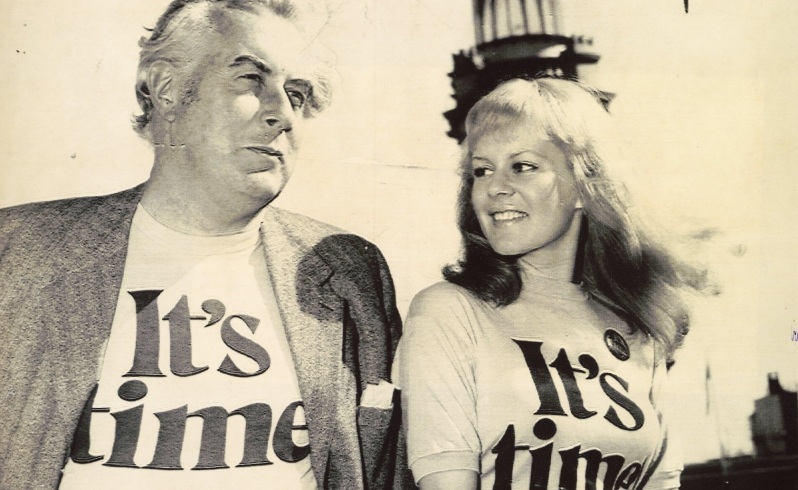
During the latter part of the 1960s, Amphlett won a number of music awards. In 1972 she participated in the now famous Labor Party It's time advertising campaign for the federal election held that year. The following year she married Keith Jacobsen, a fellow musician. During the 1970s, Amphlett performed on the club circuit and was a regular guest on television's long running Midday show.


  Amphlett has continued her musical career, performed in her own shows, hosted various charity and corporate events and given many concerts overseas. In addition to performing, she has also taught music and singing. Among her students was Nikki Webster who achieved fame for her role in the opening ceremony for the Sydney Olympics. More recently, Amphlett has taught at a number of
Sydney high schools.


In addition to her music career, Amphlett served on the Council of the Australian War Memorial between 1995 and 1998, and as the National President of Australia's Media, Entertainment and Arts Alliance. She has also been on the Federal Executive of the Australian Council of Trade Unions and was vice-president of Actors' Equity. In 2000 the Sydney Morning Herald included her on a list of the 'century's most loved faces', and she was included in a 1998 issue of Australian stamps featuring Australian bands.


Wednesday, 17 February 2016

Pardon Me Boys - 1987 - Pardon Me Boys @320


Beat Me Daddy/Shoo Shoo Baby/I I I I I (I Like You Very Much)/Hot Voodoo-Monkey Doodle Doo/Embracable You/Lounging At The Waldorf/Rythm Is Our Business/Double Trouble/Perfidia/Choo Choo Ch-Boogie


In 1985 Ignatius Jones formerly of Jimmy and the Boys formed the band Pardon Me Boys, an affectionate and slightly irreverent salute to the hits of the 30s and 40s, with the smallest hint of speakeasy sleaze, the big band swing of Glenn Miller and the heavenly harmonies of the Andrew Sisters. It grew from a 3 piece vocal group into the incredibly popular 13 piece dance band extravaganza. MonicaTrapaga was a member of the band, we all know her from her time as the presenter on Playschool and her own band Monica and The Moochers the other mainstay is William O'Riordan or as you may remember him Joylene Hairmouth also from Jimmy and the Boys.

Tuesday, 16 February 2016

Adrians Wall - 1987 - Caught In The Web


Night People/Afraid To Be Afraid/Finally Deciding/Reach Out I'll Be There/This Waiting (Is Killing Me)/Soul Breaker/Time Stands Still/The Dancer/I Doubt It (Will Ever Come True)


Adrian's Wall was Adrian Campbell's child, a studio project with local professional musicians.
Campbell, a session vocalist himself, has recorded and arranged backing vocals in countless albums in the land of Oz.

Around 1976, was the lead singer and stable member of Avalanche, a hard rock band whose debut album had moderate success, opening live shows for major international bands. In the 80's, Adrian has recorded an album with the band De Arrow (pre - Roxus), sadly still unreleased, from which only 4 demo tracks are floating around, a great keyboard oriented melodic rock / AOR stuff.


 As said, Adrian's Wall was his own project, not strictly AOR, mixing many genres, but encompassing all the styles. Featuring the great Brett Garsed on guitars (before his international stardom in the USA).


                                                         Adrian in his Avalanche days
 

Saturday, 13 February 2016

Fanny Adams - 1971 - Fanny Adams


Ain't No Loving Left/Sitting On Top Of The Room/Yesterday Was Today/Got To Get A Message To You/You Don't Bother Me/Mid Morning Madness/They're All Losers, Honey


Fanny Adams looked like a dream team, with four of Australasia's best musicians combining in a 'supergroup' and intent on conquering the world. Given the talent involved, this should have been a great group who did grand things, but, as so often happened in OzRock, the reality proved to be drastically different.
 
Vince Maloney, Johnny Dick, Teddy Toi and Doug Parkinson were veterans of some of Australia and New Zealand's top bands of the 1960s:
•Vince Melouney (sometimes spelled Maloney) had been in the original 1963-65 lineup of The Aztecs, but quit in '65 (along with the rest of the band) after a financial dispute. He and fellow Aztec Tony Barber then formed a shortlived duo, followed by a stint with Tony Worsley & The Fabulous Blue Jays. Vince then formed his own band The Vince Maloney Sect, which became the house band on the mid-'60s pop show Kommotion. Moving to England, he spent several years as lead guitarist in the late-60s UK lineup of The Bee Gees with drummer Colin Petersen.

•Johnny Dick had joined Max Merritt & The Meteors in 1963 in New Zealand and came to Australia with them in '65, alongside Teddy Toi. After the original Aztecs split from Thorpe, he and Teddy jumped ship and joined the "new" Aztecs, which lasted until 1966. He later teamed up with 'Parko' in the highly-regarded Doug Parkinson In Focus

Teddy Toi left front and Johnny Dick brown jacket in Billy Thorpe and the Aztecs

•Teddy Toi was a highly respected bassist, already a rock'n'roll veteran whose CV went back to New Zealand in the late '50s with Sonny Day & the Sundowners and included a stint in the second lineup of The Aztecs in 1965-66.


•Doug Parkinson was (and still is) one of Australia's finest male singers. He started his career in a high-school band The A Sound, followed Newcastle pop outfit The Questions, which evolved into Doug Parkinson In Focus with Johnny, Duncan McGuire and Billy Green, scoring a Top 20 hit in '68 with their superb rendition of The Beatles' "Dear Prudence" and winning the Hoadley's Battle Of The Sounds in '69.

After three-odd years with The Bee Gees in the UK, Vince quit the band over the inevitable "musical differences" and had a short spell with Ashton, Gardner & Dyke (of "Resurrection Shuffle" fame) before landing a solo deal with MCA. He decided to put together a hard rock supergroup in the Led Zeppelin mould, in order to record the album. The first offer went out to Teddy Toi, an old friend and colleague who was doing session work in London at the time. In June 1970, he invited Johnny and Doug to join him in the UK, a trip made possible by the In Focus win in the Hoadley's Battle of the Sounds -- the first prize was a trip to England.

They put together a set of strong original material, and cut the album in London, although it was not evenutally released until 1971, just after they had split. They returned to Australia in December 1970 amid a welter of hype. Boasting that they would become the biggest band in the world immediately, the band encountered resistance from a sceptical public, a situation not alleviated by Doug's boast to Go-Set that "In three weeks Fanny Adams will be the best band that ever trod this earth". Perhaps it was simply a case of being an idea before its time (although other groups like The Dave Miller Set were treading this path successfully). In the event, their brand of heavy, blues-prog rock was (so we're told) upstaged by their support bands at the time, apaprently making a mockery of the group's claims.
 
According to Ian McFarlane, tensions within the band ran high, as one might expect of such an all-star outing. They made some notable appearances, including the Myponga Festival in January 1971, and early in the year MCA released one single from the album, "Got To Get A Message To You" (which was a group original, not the Bee Gees song of the name) backed by "They're All Losers, Honey". But within months of arriving back, the band had self-destructed. The straw that evidently broke the camel's back was a fire at Sydney's Caesar's Palace discotheque, which destroyed all their equipment. Parkinson left under a cloud, and MCA were sufficiently cheesed off with Doug that they effectively banned him from recording for the next two years.

Doug evenutally assembled a new version of In Focus, and later pursued a successful solo career on the rock and club circuit, on TV and on stage. Throughout the 1970s, Melouney worked with a succession of bands, including The Cleves, Flite, Levi Smith's Clefs, the Jeff St John Band, John Paul Young and the All Stars and Rockwell T. James and the Rhythm Aces. In 1999 he was reunited with The Bee Gees for their "One Night Only" concert in Australia -- the first time they had played together since Vince left the band thirty years earlier.


Teddy Toi and Johnny Dick played on Lobby Loyde's solo album Plays with George Guitar, and then joined Loyde in a new version of The Wild Cherries. Teddy moved on to a stint in Sydney supergroup Duck in 1972-73, followed by a couple of years in the final version of The Aztecs, and Johnny enjoyed a long and successful stint as the drummer in The All-Stars, backing Stevie Wright and then John Paul.Young.

The Fanny Adams LP, which is a very fine piece of work, is now a sought-after collector's item, but it has recently been reissued on CD (albeit as a bootleg) by a German label, and if you can find it you won't be disappointed. The thundering "Ain't No Loving Left" is also included on Raven's superb Golden Miles collection.

Thursday, 11 February 2016

Gemini singles Sunshine River and Butterfly Wings


Sunshine River/12.30

Butterfly Wings/Nobody Knows When You're Down and Out


Gemini were a Perth band who were formed and broke up in 1969 but managed to release 2 singles "Sunshine River"  according to which source you believe charted at #4 #5 or #6 on the Perth charts and "Butterfly Wings". The band was discovered by some 6PR DJ's who were on a night out at the Chalet Healy were the band were playing and the tune that got there attention was "Sunshine River" they were put in touch with Martin Clarke of Clarion records and they cut "Sunshine River"  and ended up with a hit in their home town of Perth. It got as high as No 6 on the local 6PR Official chart of 17th October 1969.

The Band consisted of Sue Jennings on lead vocals with the rest of the band being Len Wright on keyboards, Paul Young on drums, Charlie Hall on Guitar, Bill Miller on Bass and Nick Melidonis on backing vocals.


Chris Hall would eventually become a novelist his debut novel, Summer’s Gone about life in the sixties was released in 2014. The book explores the reality of coming of age in Australia in that era, amid the musicbusiness, sexual freedom, women’s rights and the fight against conscription.


                         Left to Right Len Wright Sue Jennings Paul Young Nick Melidonis and Charlie Hall